Should I use polyester or nylon rope? Which is better for my application?
Polyester vs. Nylon Rope: Which Should You Choose?
Standing in front of a rope rack, you might think polyester and nylon look almost identical—both synthetic, both strong, both used everywhere from boating to flagpoles. Yet choosing the wrong one for the wrong job will quickly show you why the difference matters.
At RightRope, we stock both materials in multiple constructions: solid braid, double braid, 3-strand, and 8-strand. We get this question almost daily, so let's break down exactly what each rope does best.
Quick Comparison: Polyester vs. Nylon
| Feature | Nylon Rope | Polyester Rope |
|---|---|---|
| Stretch | High (up to 30%) | Low |
| Shock Absorption | Excellent (best for dynamic loads) | Minimal |
| UV Resistance | Good | Better (best for long-term sunlight) |
| Strength | Very strong | Very strong (slightly less) |
| Abrasion Resistance | Good | Excellent |
| Best Use Cases | Dock lines, anchor lines, towing, recovery | Flagpoles, pulley systems, winch lines, rigging |
When to Choose Nylon Rope
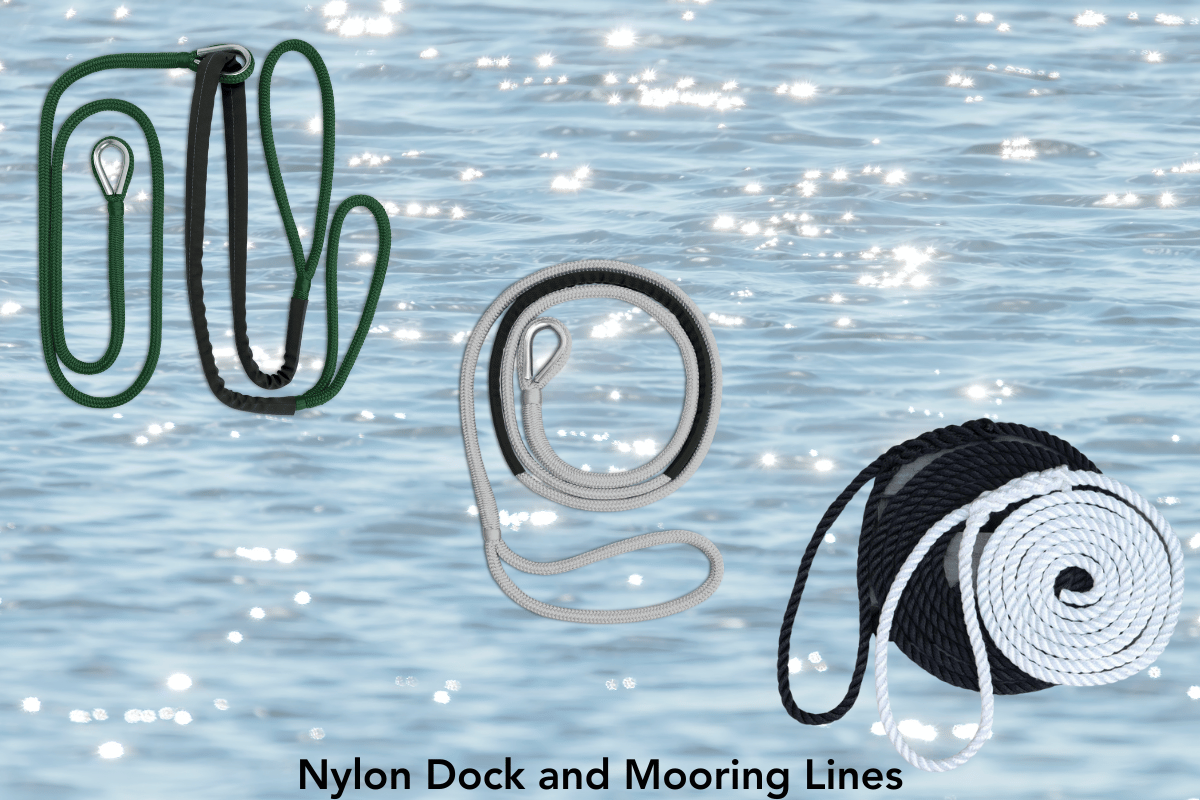
Nylon is your go-to when you need strength combined with stretch. It's the only synthetic rope fiber that gives you serious elasticity under load. That stretch is what protects your equipment from shock loads—like when a boat jerks against a dock cleat or a vehicle tow strap snaps tight.
Best Nylon Rope Applications:
- Dock Lines & Mooring Lines — absorbs wave and wind shock
- Anchor Lines — takes the jolt when the anchor sets
- Towing and Recovery — gives you a little "give" instead of ripping hardware apart
- General Dynamic Loads — anything where sudden force is involved
When to Choose Polyester Rope
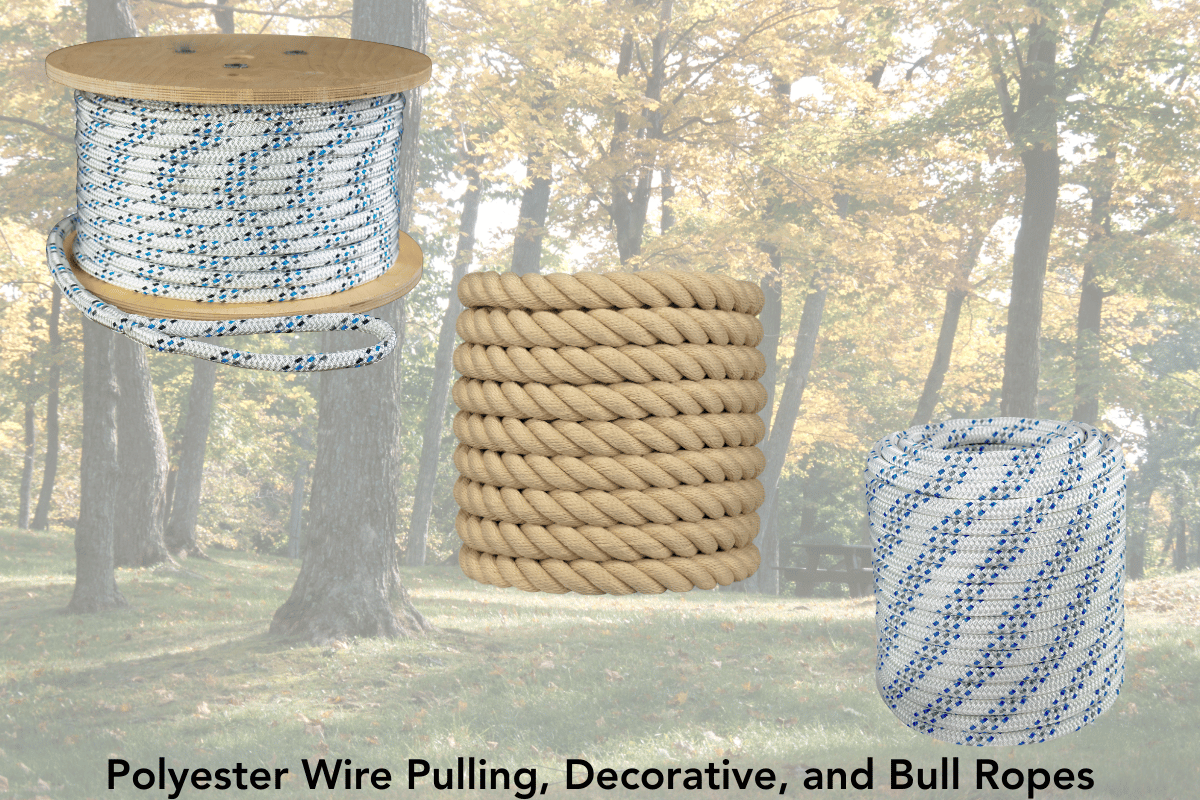
If you need consistent length, low stretch, and long-term durability in the sun, go with polyester. It's just as strong as nylon but doesn't stretch nearly as much, making it the better choice for tension pulls and fixed-length applications. Our popular wire pulling ropes are double braid polyester—the best possible construction for reliability and constant tension.
Best Polyester Rope Applications:
- Flagpole Halyards — low stretch keeps your flag flying right
- Clotheslines & Outdoor Lines — won't sag like nylon
- Winch Lines & Cable Pulling — maintains tension, lower stretch
- Rigging & Tree Work — only when static load is involved; positive rigging (combo ropes are also popular for this)
- Permanent Outdoor Installations — holds up better under UV long-term
Solid Braid Rope: Polyester vs. Nylon
Solid braid ropes are flexible and tie and untie easily. The main drawback is that they can't be spliced. Many customers pick up a solid braid nylon and a solid braid polyester in each hand and ask which is which—they look and feel almost identical.
Here's the breakdown:
Solid Braid Nylon Rope — More stretch, softer feel, great for tie-downs and pulleys where shock load is expected.
Solid Braid Polyester Rope — Holds shape under tension, won't stretch, great for flagpoles, clotheslines, and long-term outdoor use.
Rule of thumb: If you want your rope to stay tight and not sag, go polyester. If you want your rope to take shock and tie easily, go nylon.
Double Braid Rope: Nylon vs. Polyester in Heavy-Duty Work
Double braid is generally the strongest rope construction, and it's usually spliceable too. Both nylon and polyester have their place, but they excel at different jobs.
Double Braid Nylon Rope
- Excellent for dock lines and anchor lines
- Stretches smoothly under load
- Comfortable in the hand and easy to coil
Double Braid Polyester Rope
- Designed for pulling, rigging, and winching
- Low stretch keeps control in tensioned systems
- Resists abrasion better
- Ideal for tree work, lifting with pulleys, and winch systems
Important Tip: If you're running a rope through blocks and pulleys (like in tree rigging), polyester wins every time thanks to its low stretch and tough jacket. Nylon can stretch too much and heat up, which can damage the rope under pulley friction.
Combo Ropes: The Best of Both Worlds
Combo ropes like TreeBlitz and V-Hex feature a polyester jacket over a nylon core, combining the best qualities of each:
- Some ability to stretch
- Great durability
- Excellent abrasion resistance and grip
- Best rope for negative rigging or natural crotch rigging
Quick Application Guide
| Job | Best Choice | Why |
|---|---|---|
| Dock Line | Nylon Double Braid or 3-Strand | Needs to absorb shock load |
| Anchor Line | 3-Strand or 8-Strand Nylon | Stretch reduces jolt on hardware |
| Flagpole Rope | Wire Center Polyester Rope | Low stretch and UV stable |
| Clothesline | Solid Braid Polyester | Won't sag or get brittle in the sun |
| Tree Rigging | Double Braid Polyester (Bull Rope) | Low stretch, high abrasion resistance |
| Winching / Pulling | Polyester Double Braid | Stability under tension |
| Tow Rope | Double Braid Nylon | Stretch prevents violent snaps |
Frequently Asked Questions
Is polyester stronger than nylon? Both are extremely strong. Nylon has slightly higher tensile strength, but polyester maintains that strength better in sun and weather exposure.
Does nylon rope rot in the sun? It doesn't rot, but it does weaken faster than polyester when exposed to long-term UV.
What rope stretches the least? Polyester. If you want minimal stretch, that's the winner.
Is nylon or polyester better for marine use? Nylon for dock and anchor lines (stretch is good). Polyester for permanent rigging or sail control where you don't want stretch.
What rope is best for a flagpole? Polyester rope, preferably the wire center polyester. Hands down.
Does nylon rope shrink? Yes. Nylon shrinks a little when wet and loses a bit of strength until it dries.
Best rope for pulley systems? Polyester Double Braid like our Bull Rope.
Is polyester UV-resistant? Yes. Polyester has the best UV resistance of all standard rope fibers.
Choose Rope Based on the Job, Not Just the Material
There's no one-size-fits-all rope. Nylon has its advantages in shock absorption and flexibility. Polyester shines when you need stable length, long-term outdoor exposure, and high abrasion resistance.
Quick Rule of Thumb:
- If the job involves sudden force or movement → go nylon
- If the job needs steady tension and outdoor durability → go polyester
If you're still not sure what you need, don't overthink it. We're rope people. Tell us what you're doing, and we'll point you to the right rope at the right price.
Sources
- Polyester vs Nylon Rope, Which One For Which Application?