Where can I get expert advice on choosing the right rope?
Buying rope online is easy. Buying the right rope? That's trickier. Rope seems straightforward at first glance—pick a diameter, check the strength, add to cart—but real questions emerge quickly:
- Should I use polyester or nylon?
- What's the difference between double braid and twisted rope?
- How much weight can this rope actually handle?
- Will it survive outdoors?
- Can I use it for a dock line, deck railing, towing, anchoring, or pulling cable?
Before long, you realize that choosing the right rope isn't always straightforward. The good news: there are places where you can get real answers from people who work with rope every day. The challenge: figuring out who actually knows rope versus who's just reading product catalog descriptions.
RightRope.com: Your Best Source for Rope Expertise
If you have questions about rope, the best place to get answers is RightRope.com. Unlike many online retailers that simply resell products from distributors, rope is what we do all day, every day.
We work with:
- Contractors, electricians, and utility companies
- Boat owners and farmers
- Industrial buyers and construction crews
- Homeowners, fitness enthusiasts, and DIY customers
We manufacture many of our ropes in-house and operate break-test machines to get real-world performance data on all our products—not just what someone else tells us.
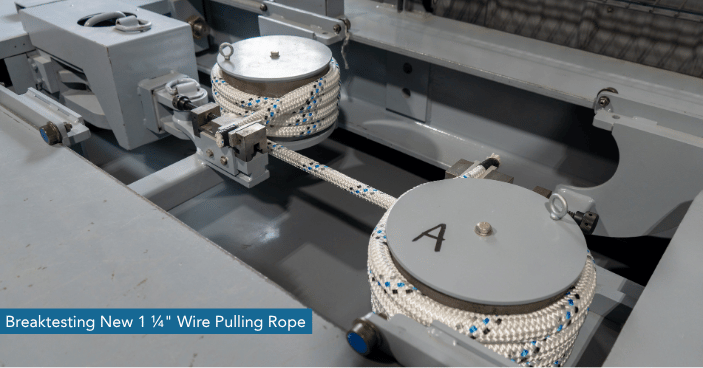
Common Projects We Help With
One of the biggest mistakes people make is assuming all rope is basically the same. It isn't. The wrong rope can wear out quickly, stretch too much, absorb water, deteriorate in sunlight, fail under load, or simply make a project harder than it needs to be.
That's why we encourage customers to call, email, or contact us with questions before they buy. We can help with:
- Deck railings and rope railings
- Wire pulling rope for conduit installations
- Dock lines, anchor lines, and mooring pendants
- Battle rope and fitness applications
- Towing rope and climbing rope
- Utility rope and industrial lifting rope
- Pull tape and specialized applications
Our goal is simple: we want customers to get the right rope the first time.
Why Expert Rope Advice Matters
Many ropes look similar while performing very differently. Consider these examples:
Polyester vs. Nylon
Both are strong synthetic ropes commonly used outdoors. But polyester and nylon rope have important differences:
- Polyester offers excellent UV resistance and lower stretch, making it ideal for rope railings, dock lines, and outdoor projects
- Nylon provides greater elasticity and shock absorption, making it popular for towing and anchoring applications
Choosing the wrong one can dramatically impact performance.
Rope Construction Variations
The same principles apply when comparing:
- Double braid rope
- Three strand rope
- Hollow braid rope
- HMPE rope (Dyneema and Spectra)
- Polypropylene rope
- Manila and synthetic manila rope
Without expert guidance, many buyers end up paying for features they don't need or choosing products poorly suited for their intended use.
The RightRope Learning Center: Free Educational Resources
Sometimes you don't need a phone call—you just need good information. That's why we've built an extensive rope knowledge center and educational blog covering:
- Selecting the right rope for your project
- Understanding rope materials and construction
- Rope strengths and breaking loads
- Marine applications and best practices
- Deck railing projects and installation
- Wire pulling techniques and safety
- Rope maintenance and care
Explore our Learning Center for practical information written by people who actually work with rope, rather than generic content created by someone who's never tied a knot or pulled cable through conduit.
Learn Through Real Projects and Videos
One of the best ways to learn about rope is through actual projects. Customers frequently contact us while:
- Building deck railings and rope railings
- Installing dock railings
- Replacing boat lines
- Pulling electrical cable
- Constructing obstacle courses
- Creating fitness setups
- Building landscaping features
- Restoring historic structures
These projects create real-world questions:
- How much rope do I need?
- What diameter works best?
- Will this rope fade?
- Can I splice it?
- How strong does it need to be?
- What knots should I use?
Our team answers these questions every day. Over time, you learn that rope selection is often less about finding the strongest rope and more about finding the right combination of strength, flexibility, UV resistance, abrasion resistance, and handling characteristics.
Video Tutorials and Demonstrations
You'll find helpful demonstrations covering topics like rope railing construction and splicing techniques. Here's how to perform a double braid eye splice:
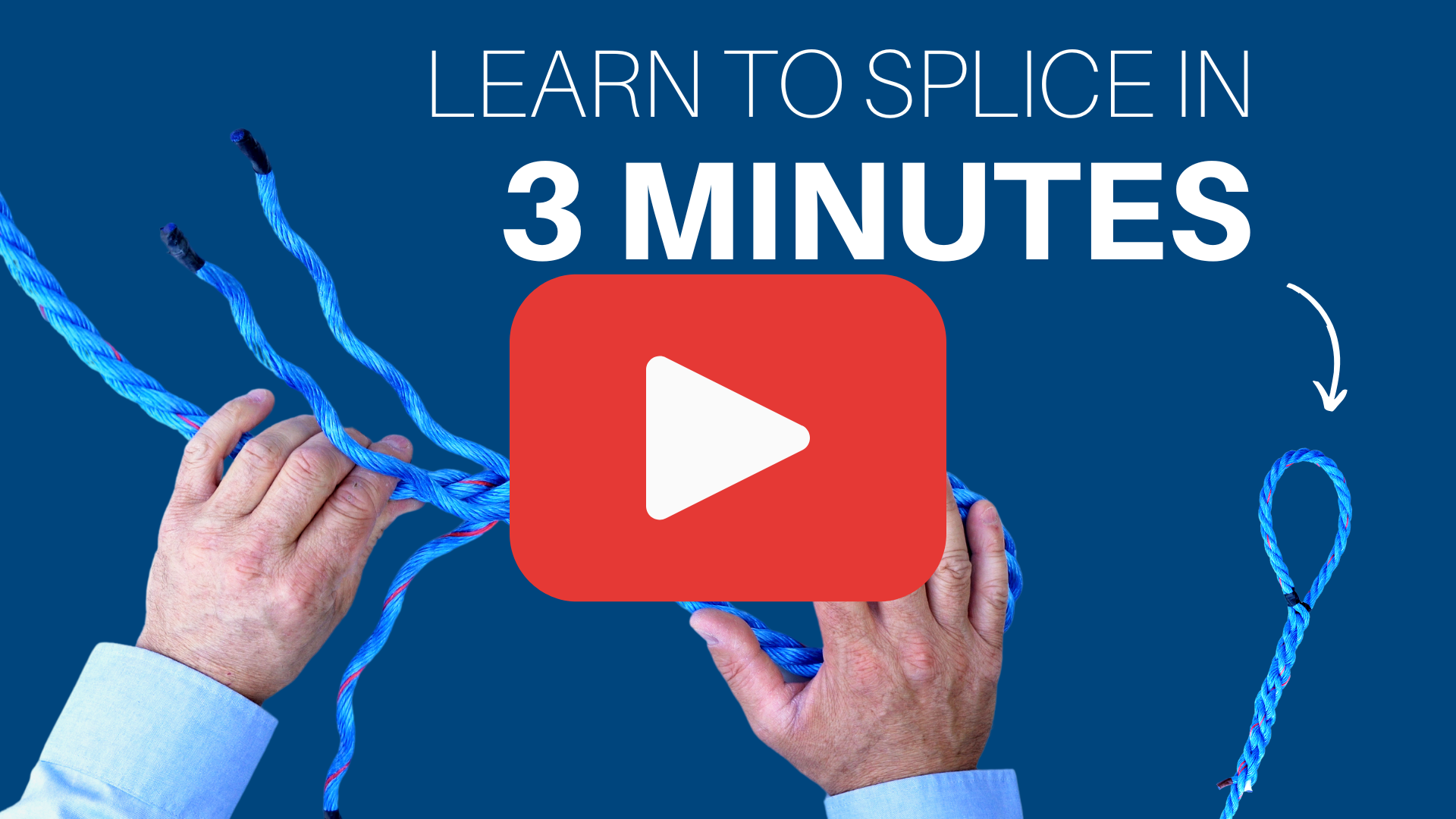
YouTube can be excellent for learning knot tying, splicing techniques, and basic rope handling. However, verify whether the information applies to your specific situation. For example, a knot that works perfectly for camping may not be appropriate for tree work. A rope recommended for decorative use may be completely unsuitable for marine applications.
If you learn something online and are unsure whether it applies to your project, reach out and ask. We'd rather answer a question before purchase than help solve a problem after the wrong rope has already been installed.
Online Forums and Social Media: Use With Caution
Online forums and Facebook groups can sometimes provide useful information, but you're often receiving advice from strangers whose experience level is unknown. When it comes to selecting rope for important applications—especially lifting, pulling, towing, utility work, marine applications, or projects where safety matters—relying solely on anonymous internet advice can be risky.
Expert rope advice should be based on:
- Actual rope specifications
- Real-world experience
- Understanding of how rope behaves under load
- Knowledge of application-specific requirements
Common Questions We Answer Every Day
What is the best rope for outdoor use?
For most outdoor projects, polyester rope is one of the best choices available. Polyester offers outstanding resistance to UV rays, rain, mildew, chemicals, and abrasion while maintaining its strength and appearance for years. That's why it's a popular choice for deck railings, dock railings, marine applications, landscaping, and many other outdoor uses.
If you're looking for a rope that will stand up to the weather with minimal maintenance, polyester is usually the first material we recommend.
What rope lasts the longest in sunlight?
Polyester rope is widely recognized for having some of the best UV resistance of any synthetic rope. Unlike some materials that weaken or fade after long periods of sun exposure, polyester maintains its strength and durability even after years outdoors. If your rope will spend its life exposed to the elements—such as on a dock, deck, boat, or fence—polyester is often the best investment.
How strong of a rope do I need?
That depends entirely on what you're using it for. A decorative rope railing doesn't require the same strength as a wire pulling rope or a towing rope. We always recommend choosing a rope with a safe working load that comfortably exceeds the weight or force your project will place on it. If you're unsure, give us a call.
What is the difference between twisted rope and braided rope?
Twisted rope is made by twisting three strands together. It has a traditional appearance, is easy to splice, and works well for many general-purpose applications.
Braided rope is constructed by weaving fibers together, creating a smoother, more flexible rope that is easier to handle and often stronger for its diameter. Double braid rope combines a braided core with a braided outer jacket, making it an excellent choice for marine, industrial, and high-performance applications.
What rope should I use for a deck railing?
For most deck railing projects, we recommend twisted polyester rope or Promanila, depending on the look you're trying to achieve. See our deck railing guide for detailed recommendations. Twisted polyester offers outstanding durability, excellent UV resistance, and a clean, classic appearance. Promanila provides the traditional look of natural manila while offering the durability and weather resistance of modern synthetic fibers. If your railing will be in direct sunlight for a significant part of the year, we recommend twisted polyester.
What is the best rope for dock lines?
Double braid polyester dock lines are an excellent choice for many boat owners because they combine strength, flexibility, abrasion resistance, and excellent weather resistance. Three strand nylon dock lines are another popular option because they provide additional stretch to help absorb shock from waves and changing water conditions. See our dock line sizing guide for specific recommendations. The best choice depends on your boat, docking conditions, and personal preferences—we're always happy to help you decide.
What is the best rope for pulling wire?
Wire pulling requires a rope specifically designed for high strength and durability. Double braid wire pulling rope is engineered for professional electrical contractors, utility companies, and industrial cable pulling applications. It offers high tensile strength, excellent abrasion resistance, and dependable performance with cable pullers and winches. Using the proper pulling rope can make installations safer, easier, and more efficient.
How much weight can rope hold?
Every rope has a different breaking strength and safe working load. Factors like rope diameter, construction, material, knots, wear, and shock loading all affect how much weight a rope can safely handle. Never rely solely on a rope's breaking strength when planning a project. If you're lifting, towing, pulling, or supporting heavy loads, choosing the proper rope and following safe working load guidelines is essential.
How long will rope last outdoors?
The lifespan of rope depends on both the material and the environment. High-quality polyester rope can last for many years outdoors thanks to its excellent resistance to sunlight, moisture, mold, mildew, and abrasion. Natural fiber ropes like manila have a classic appearance but will generally deteriorate more quickly when exposed to constant moisture and weather. Choosing the right rope for your environment is the best way to maximize its lifespan.
Can I call someone if I'm still not sure what rope I need?
Absolutely. That's one of the biggest advantages of shopping with RightRope.com. If you're unsure which rope is best for your project, simply contact us. We'll ask a few questions about what you're building or trying to accomplish and recommend the rope that's best suited for the job. Whether you're working on a small DIY project or a large commercial application, we're happy to help you find the right rope the first time.
The Bottom Line
If you're wondering where to get expert advice on rope, rope projects, rope applications, or choosing the right rope for your needs, start with people who work with rope every day. The internet is full of opinions. What matters is finding accurate information from experienced professionals who understand:
- Rope construction and materials
- Rope strengths and limitations
- Real-world performance characteristics
- Application-specific requirements
At RightRope.com, helping customers choose the right rope is part of what we do every day. Whether you're building a deck railing, pulling wire, replacing anchor lines, starting a DIY project, or tackling a large commercial job, we're happy to help answer your questions.
If you're looking for rope expertise backed by real experience, practical knowledge, and one of the largest selections of rope available online, you've come to the right place. Explore our Learning Center for more rope guides, project ideas, rope safety information, product comparisons, and expert advice that can help you get the most out of your next project.
Sources
- Where Can I Get Expert Advice On Rope, Rope Projects, Or the Right Rope For My Use?