When Should a Ski Resort Replace Its Rope Tow? A Guide to Ski Tow Rope Wear, Maintenance, and Replacement
Estimated 0 min read
A ski resort can have perfectly groomed slopes, fresh powder, and a beautiful winter day, but none of that matters much if the rope tow isn't running. A worn-out ski tow rope can bring an entire lift to a stop, leaving skiers stranded at the bottom of the hill and operators scrambling to get things moving again.
For ski resorts, tubing hills, winter recreation facilities, and other commercial rope tow operators, keeping a reliable tow rope in service is an important part of keeping the business running. And while a quality ski tow rope is built to withstand plenty of abuse, no rope lasts forever.
So how do you know when it's time to replace your ski tow rope? What kind of maintenance can extend its life? And when replacement time comes, which rope should you buy?
Let's take a look at what commercial ski tow operators need to know about rope inspection, maintenance, and replacement, including how to choose the right rope for your ski hill.
BTW, If you’re just here looking for a new replacement ski tow rope our 8-Strand Viking Ski Tow Rope is the most popular choice.
How Long Does a Ski Tow Rope Last?
Unfortunately, there's no magic number of seasons that tells you when a ski tow rope needs replacing. A rope that sees occasional use on a small recreational hill is going to have a very different life than one running all day, every day, at a busy ski resort.
The biggest factors affecting ski tow rope lifespan include how frequently the lift operates, the number of riders, rope construction, sheave condition, operating tension, exposure to sunlight, and how well the rope is maintained.
A rope that runs through properly maintained equipment and is inspected regularly may provide years of reliable service. On the other hand, a rope running over worn sheaves, rubbing against stationary surfaces, or operating under improper tension can deteriorate much faster.
The important thing is to judge the condition of your rope rather than simply counting winters. Follow the lift manufacturer's inspection and retirement requirements, along with applicable regulations. Even a relatively new rope can become unsafe if it's been damaged.
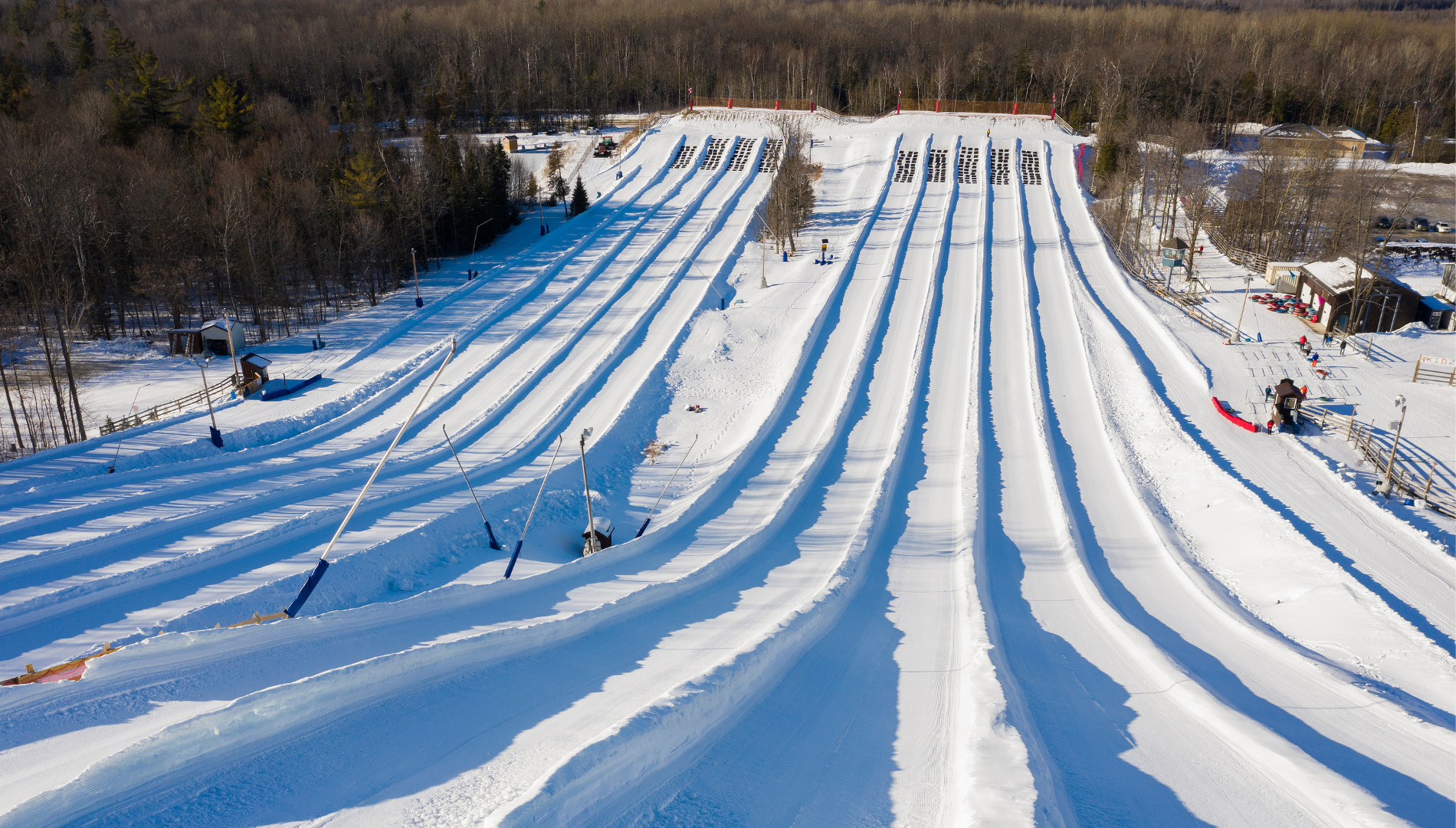
Signs Your Ski Tow Rope Needs to Be Replaced
A commercial ski tow rope takes a beating. (Not looking for commercial, but instead something for your backyard ski tow? Check out our blog here on backyard ski tow ropes) It's constantly moving around pulleys, handling changing loads as skiers grab and release it, and spending long hours exposed to snow, ice, moisture, and sunlight.
Over time, all that use adds up. Here are some of the most important warning signs to watch for.
Excessive Fraying and Abrasion
Some surface fuzzing can develop as a rope wears, but significant abrasion, broken yarns, or strands that are beginning to separate are signs that the rope may be losing strength.
Pay particular attention to areas that repeatedly contact sheaves, guides, and other equipment. If you notice concentrated wear in one section, don't just assume the rope is getting old. There may be an equipment problem causing the damage.
A rough or misaligned sheave can wear through a rope much faster than normal operation would.
Flat Spots, Uneven Diameter, or Deformed Sections
A healthy ski tow rope should maintain a reasonably consistent shape and diameter along its length.
If sections appear flattened, crushed, unusually narrow, or otherwise deformed, the rope may have experienced excessive pressure, internal fiber damage, or improper handling.
These problems aren't always obvious from a distance, which is why regular hands-on inspections, performed with the lift shut down and secured against unexpected movement, are important.
Glazing, Melting, or Heat Damage
Synthetic ropes can be damaged by friction heat. If the rope has been slipping against a drive wheel or rubbing against a stationary surface, the fibers may develop a shiny, hardened, or glazed appearance.
This isn't just a cosmetic problem. Heat can damage synthetic fibers and compromise rope strength.
If you find glazing or melted fibers, take the rope out of service for evaluation by a qualified person. You should also investigate what's causing the friction before installing a replacement.
Unusual Stiffness or Changes in Rope Feel
A ski tow rope should maintain the flexibility expected for its construction.
Sections that become unusually stiff, brittle, lumpy, or inconsistent may indicate damage, contamination, or deterioration.
Some ropes are specifically constructed to resist water absorption and remain manageable in freezing temperatures. If a rope that normally handles well suddenly feels different, it's worth investigating.
Damaged or Deteriorating Splices
The splice is one of the most important areas to inspect on an endless-loop ski tow rope.
Look for broken strands, excessive wear, changes in diameter, movement within the splice, or other signs that the connection is no longer performing as intended.
A poorly executed or damaged splice can become a serious weak point in the system.
Never attempt to repair or resplice a commercial lift rope without following the lift manufacturer's approved procedures and applicable inspection requirements.
Why Ski Tow Rope Maintenance Matters for Commercial Operators
Replacing a ski tow rope costs money, but an unexpected failure during operating hours can cost considerably more.
Consider a small ski hill with a rope tow serving a beginner slope. If that lift goes down on a busy Saturday, the resort may lose access to an entire section of its terrain.
That means unhappy customers, interrupted lessons, potential refunds, and employees who suddenly have nothing productive to do.
And that's assuming the failure doesn't cause an injury or damage other equipment.
A planned rope replacement during the off-season is generally much easier to manage than an emergency replacement in the middle of January.
For commercial operators, the goal should be to identify developing problems early, maintain the equipment properly, and replace the rope before its condition becomes a safety issue.
How to Extend the Life of Your Ski Tow Rope
Good maintenance won't make a ski tow rope last forever, but it can help prevent unnecessary wear and premature replacement.
Inspect the Rope Regularly
A visual inspection before operation can help identify obvious damage, while more detailed periodic inspections can catch developing problems that aren't immediately visible.
Pay attention to changes in diameter, broken strands, unusual stiffness, abrasion, and the condition of the splice.
Keep records of inspections and any problems you discover. This makes it easier to identify patterns and determine whether wear is progressing unusually quickly.
Commercial lift operators should follow the inspection frequency, documentation, and personnel qualification requirements applicable to their equipment.
Keep Sheaves and Drive Components in Good Condition
One of the best ways to extend rope life is to make sure the equipment contacting the rope is in good condition.
Worn sheaves, rough surfaces, improper alignment, and damaged guides can create excessive abrasion.
Sheave diameter also matters. A pulley that's too small for the rope can create excessive bending stress as the rope travels around it.
The correct sheave diameter depends on the rope's construction and the lift manufacturer's specifications. Don't assume that a rope will work properly with existing equipment simply because its diameter is the same as the old rope.
Maintain Proper Rope Tension
Too little tension can contribute to slipping and inconsistent operation, while excessive tension can increase stress on the rope and lift components.
Both conditions can shorten rope life.
Follow the lift manufacturer's procedures for setting and maintaining rope tension. A replacement rope may also require adjustments or monitoring during its initial service period.
Store Spare Rope Properly
If your ski resort keeps a replacement rope on hand, proper storage is important.
Store the rope in a clean, dry, well-ventilated area away from direct sunlight, chemicals, sharp edges, and unnecessary heat.
Keep it on a suitable reel or otherwise supported so it doesn't become kinked, crushed, or contaminated.
And if you remove a serviceable rope for seasonal storage, inspect and document its condition before putting it away.
Choosing the Best Replacement Ski Tow Rope for Your Resort
When it's time to purchase a replacement ski tow rope, there are several important decisions to make.
At RightRope.com, we offer four different ski tow rope options, including Nordic and Viking constructions in both 3-strand and 8-strand configurations.
Each has its own advantages, depending on your equipment, budget, and operating conditions.
The first step is always to confirm the rope specifications required by your lift manufacturer. Diameter, construction, strength, elongation, splice design, and compatibility with the drive system all matter. A rope's advertised breaking strength or safe working load alone does not establish that it's suitable for a passenger rope tow.
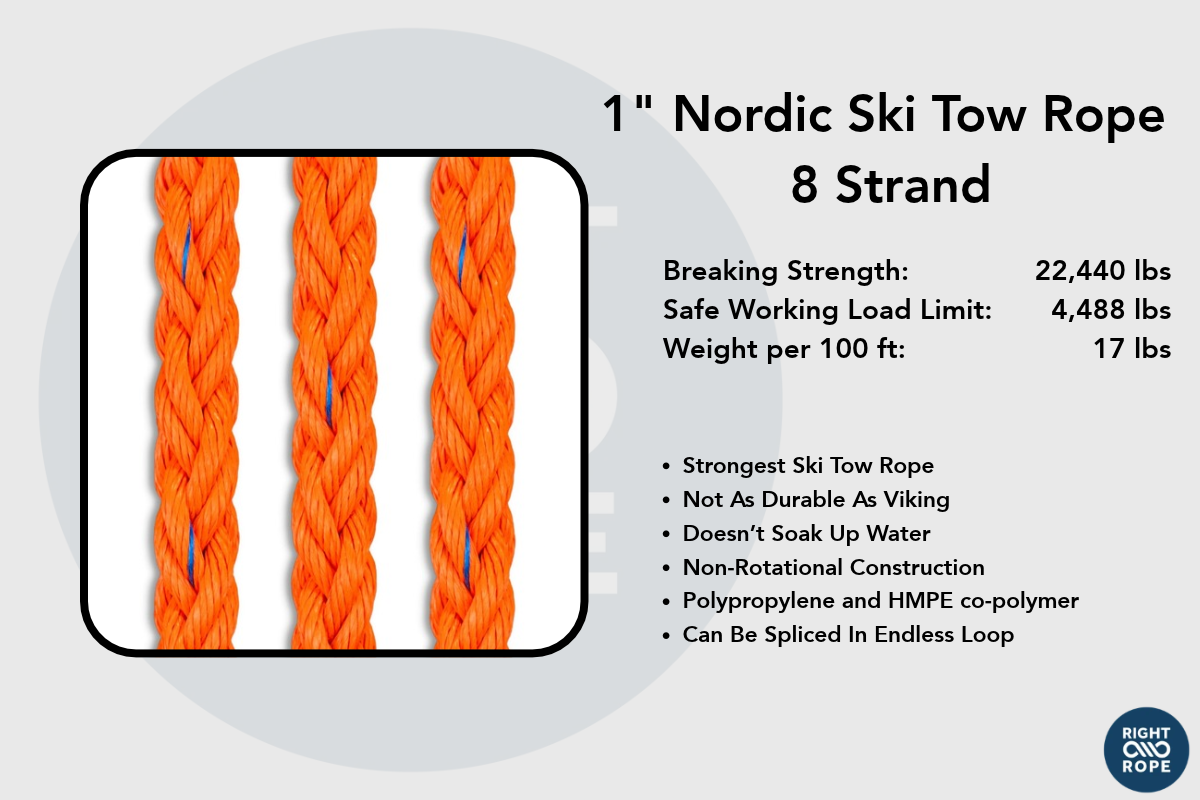
Nordic Ski Tow Rope: A Durable, Economical Option
Our Nordic ski tow ropes are constructed from a synthetic co-polymer blend of polypropylene and high-modulus polyethylene resins.
This combination produces a lightweight rope with good strength, low stretch, and resistance to water absorption.
That last feature is especially useful in snowy environments. Because the material doesn't soak up water, it avoids the added weight and stiffness associated with water absorption and freezing.
Nordic ski tow rope is also approximately 35% stronger than standard polypropylene rope, making it a practical option for appropriately specified recreational rope tow systems.
We offer two constructions.
Nordic Ski Tow Rope, 3 Strand is an economical twisted rope available in 1-inch, 1-1/8-inch, and 1-1/4-inch diameters. Its traditional construction can be a good fit for equipment designed to use 3-strand rope.
Nordic Ski Tow Rope, 8 Strand offers a non-rotational construction with good handling characteristics, low stretch, and resistance to water absorption.
For operators looking for a dependable replacement without paying for more rope than their application requires, Nordic is worth considering.
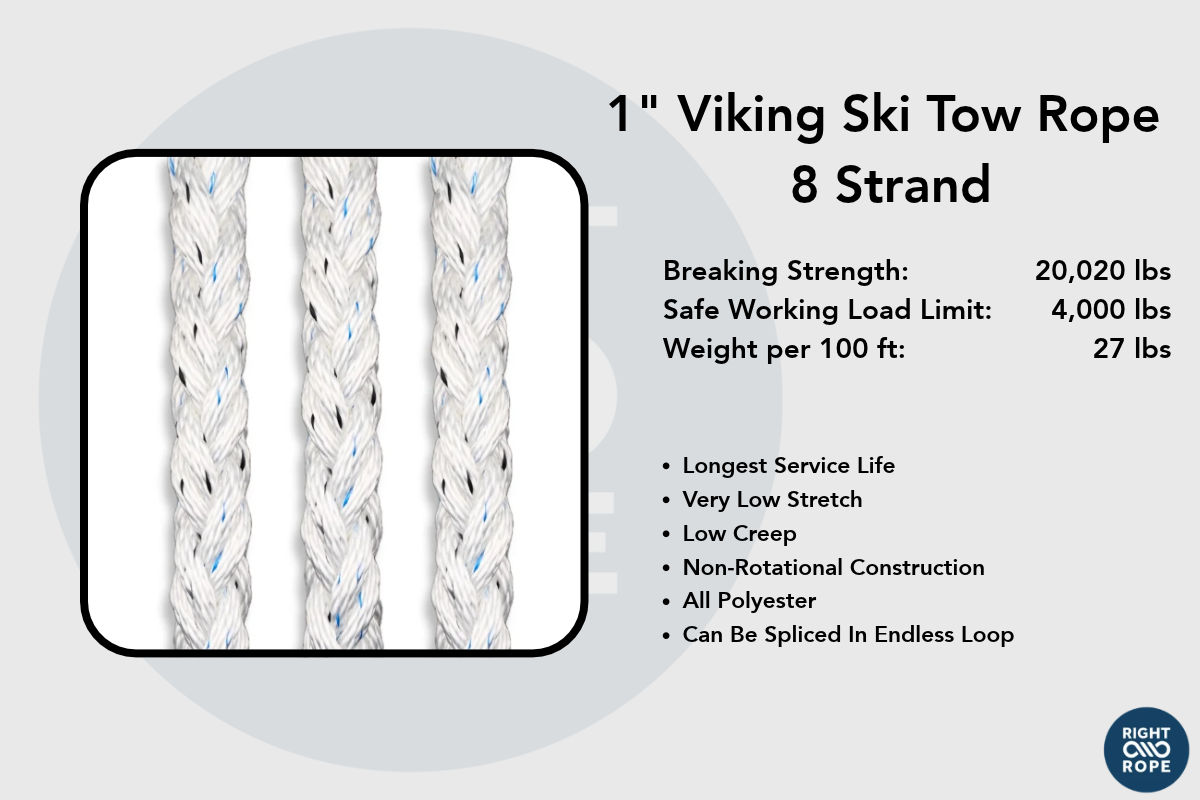
Viking Ski Tow Rope: Premium Durability for Demanding Applications
For ski hills that see heavy use, Viking ski tow rope offers a more premium option.
Our Viking ropes use polyester to provide excellent abrasion resistance, UV resistance, and low stretch.
Viking Ski Tow Rope, 3 Strand features high-strength polyolefin yarns wrapped in high-tenacity polyester yarns.
The polyolefin helps keep the rope lightweight and resistant to water absorption, while the polyester exterior provides excellent resistance to rubbing and sunlight.
It's a higher-tenacity alternative to traditional poly-dacron combination ropes and is available in 1-inch and 1-1/8-inch diameters.
Viking Ski Tow Rope, 8 Strand is our premium all-polyester option. Its 8-strand cabled construction provides high strength, very low stretch, low creep, and excellent UV and abrasion resistance.
For commercial ski tow operators dealing with frequent use and demanding operating conditions, Viking 8-strand is well worth evaluating, provided it meets the equipment manufacturer's specifications.
3-Strand vs. 8-Strand Ski Tow Rope: What's the Difference?
Beyond the material itself, rope construction has a major influence on performance.
Traditional 3-strand ski tow rope is twisted together from three strands. It's economical, familiar, and relatively straightforward to splice using the proper techniques.
However, twisted rope can develop torque under tension. If it isn't installed and handled correctly, that torque can cause unwanted rotation and handling problems.
8-strand rope uses a balanced construction that greatly reduces the tendency to rotate under load.
This can be especially valuable in a continuous-loop rope tow, where the rope travels around the system thousands of times during operation.
8-strand rope also offers excellent handling characteristics and can be a good choice for demanding applications.
That doesn't mean every ski resort should automatically switch from 3-strand to 8-strand rope. The lift's drive system, sheaves, splice requirements, and original engineering specifications must all be considered.
If your system was designed for a particular rope construction, consult the lift manufacturer or a qualified lift engineer before changing it.
How Much Ski Tow Rope Do You Need?
Ordering the right length is just as important as choosing the right construction.
Most rope tow systems use a continuous loop, which means the total rope length is considerably greater than the distance from the bottom of the hill to the top.
For example, a system with a 500-foot uphill run and a roughly equal return run would need approximately 1,000 feet of rope before accounting for the actual rope path, terminal geometry, tensioning travel, and splice requirements.
That doesn't mean you should simply double the hill length and place your order.
The correct finished length needs to be calculated using the actual lift geometry and manufacturer requirements.
For larger commercial installations, it's especially important to confirm the required finished circumference and splice specifications before purchasing.
Should You Order an Endless-Loop Ski Tow Rope?
Many ski tow systems require an endless loop, where the ends of the rope are joined with a long splice.
A properly designed and executed long splice can create a smooth transition through the system while maintaining the required performance characteristics.
However, splice requirements vary by rope construction and lift design. The splice needs to be compatible with the rope, sheaves, drive system, and applicable lift standards.
At RightRope, we offer custom splicing services and can discuss long-splice options for ski tow rope orders.
If you're purchasing a replacement for a commercial ski hill, contact us with your rope specifications and splice requirements so we can discuss the available options. Any finished assembly must still be approved for use on your particular lift.
When Is the Best Time to Replace a Commercial Ski Tow Rope?
If you operate a ski resort, the best time to replace a rope tow is generally before the ski season starts.
Summer and early fall provide an opportunity to inspect equipment, identify developing problems, order replacement materials, and schedule installation without interrupting paying customers.
Waiting until the first major snowfall to discover that your rope is badly worn is a good way to create an unnecessary headache.
For busy facilities, keeping an appropriately specified spare rope available may also make sense.
A spare rope represents an upfront investment, but it can reduce downtime if an unexpected problem develops during the season.
Of course, if an inspection reveals damage that makes the rope unsafe, don't wait until the off-season. Remove the lift from service and follow the appropriate repair or replacement procedures.
Where Can Ski Resorts Buy Replacement Ski Tow Rope?
If you're looking for a commercial ski tow rope supplier, you want more than a company that happens to sell rope.
You want a supplier that understands the differences between rope constructions, offers quality materials, can help you review product specifications, and can supply the lengths your project requires.
At RightRope.com, we stock a range of Nordic and Viking ski tow ropes designed for winter recreation applications.
We offer cut-to-order lengths, multiple rope diameters, and custom splicing services. We also offer fast shipping, with same-day shipping available for qualifying in-stock orders placed before our cutoff time.
Whether you're replacing a rope on a small community ski hill or sourcing material for a larger commercial installation, we're happy to help you compare your options.
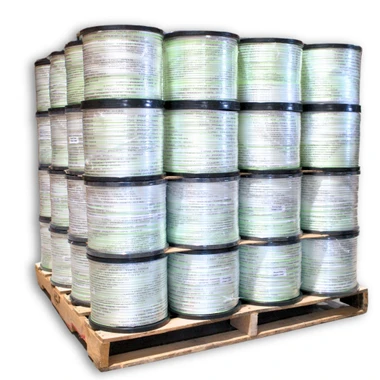
For large ski tow rope orders, contact our team to discuss availability, specifications, custom lengths, and potential bulk purchasing options.
Frequently Asked Questions About Ski Tow Rope Replacement
How often should a commercial ski tow rope be replaced?
There is no universal replacement interval that applies to every ski tow rope. Service life depends on usage, construction, operating conditions, equipment maintenance, and the manufacturer's requirements. Inspect ropes regularly and replace them when their condition or applicable retirement criteria require it.
What is the best rope for a commercial ski tow?
Both Nordic and Viking ski tow ropes are worth considering. Viking offers premium polyester-based options with excellent abrasion resistance, while Nordic provides economical, lightweight co-polymer constructions. The best choice is one that meets the lift manufacturer's requirements for material, diameter, strength, construction, and performance.
Is 8-strand ski tow rope better than 3-strand?
8-strand rope has a balanced, non-rotational construction that can provide handling advantages in continuous-loop systems. However, 3-strand rope remains a practical choice for equipment designed to use it. Neither should be substituted for the other without confirming compatibility.
Can you splice a ski tow rope into an endless loop?
Yes. Many rope tow systems use a long splice to create an endless loop. The splice must be appropriate for the rope construction and approved for the particular lift system. RightRope offers custom splicing services and can discuss available options.
What causes ski tow ropes to wear out prematurely?
Common causes include worn or misaligned sheaves, excessive friction, improper tension, unsuitable rope construction, poor installation, and heavy operating loads. Identifying and correcting the cause of premature wear is important before installing a new rope.
How much rope do I need for a 500-foot ski tow?
A rope tow with a 500-foot uphill run and a similar return run may require around 1,000 feet of rope or more. The actual finished length depends on the complete rope path, terminal arrangements, tensioning system, and splice specifications. Always use the lift manufacturer's measurements and requirements.
Can I buy ski tow rope in bulk for a resort or multiple lifts?
Yes. RightRope offers ski tow rope in cut-to-order lengths and can discuss larger purchases for commercial operators. If you're maintaining multiple rope tows or planning seasonal replacements, contact us to discuss your requirements.
Keep Your Ski Tow Running With the Right Rope
A ski tow rope might not be the most exciting piece of equipment at your resort, but when it stops working, everyone notices.
Regular inspections, properly maintained equipment, and timely replacement can help keep your lifts operating reliably throughout the winter.
And when replacement time comes, choosing a quality rope that's properly matched to your system is one of the best investments you can make.
At RightRope, we carry Nordic and Viking ski tow ropes in multiple constructions and diameters, with custom lengths and splicing options available.
Planning a ski tow rope replacement or sourcing rope for multiple lifts? Get in touch with our team at RightRope.com to discuss your project. We'll help you find the right rope for the job, without paying for features you don't need.
Safety note: Commercial rope tows are passenger-carrying lift systems subject to applicable safety regulations, manufacturer requirements, and inspection procedures. This article provides general rope information and is not a substitute for qualified lift engineering, inspection, or maintenance.