What’s The Real Difference Between Dyneema, Spectra, And Amsteel HMPE Ropes? And What About Non-Branded HMPE Rope?
Estimated 0 min read
If you’ve been shopping for ultra-strong synthetic rope, you’ve probably felt like you were being asked to learn a new language. One website talks about Dyneema rope. Another swears by Spectra rope. Then someone on a boating forum tells you to buy Amsteel-Blue. Meanwhile, you find a product labeled HMPE rope or UHMWPE rope that looks nearly identical but costs quite a bit less.
So what is the real difference between Dyneema, Spectra, Amsteel, and non-branded HMPE rope?
The short answer is that they are all built around the same family of high-performance fibers. In many cases, the biggest difference is not what the rope is made from, but what name is printed on the box and how much marketing went into selling it.
If you have searched for terms like “Dyneema vs Spectra,” “Amsteel vs Dyneema,” “best alternative to Amsteel,” or “is generic HMPE rope as strong as Dyneema,” you are in exactly the right place.
Let’s strip away the branding, look at the actual material, compare performance, and explain why the non-branded HMPE rope sold on RightRope.com is often the smartest buy for anyone who wants premium strength without paying premium brand-name prices.
What Is HMPE Rope?
HMPE stands for High Modulus Polyethylene. You may also see it referred to as UHMWPE, which stands for Ultra High Molecular Weight Polyethylene.
That may sound complicated, but the concept is simple. HMPE is one of the strongest synthetic fibers available. Pound for pound, it is stronger than steel, yet it floats on water and is incredibly lightweight. To learn more about how HMPE is made, read this.
This material has become the standard for high-performance winch lines, sailboat rigging, towing lines, industrial lifting slings, and countless other demanding applications.
When people search for “strongest rope material,” “synthetic rope stronger than steel,” or “best rope for winch line,” HMPE is almost always the answer.
What Is Dyneema?
Dyneema is a brand name for HMPE fiber. In other words, Dyneema is not a completely different material. It is a branded version of HMPE fiber produced to specific standards and sold under a well-known trade name.
Over the years, Dyneema has built a strong reputation in sailing, industrial rigging, and high-performance outdoor gear. It is an excellent fiber, but at its core, it is still HMPE.
That means when you buy Dyneema rope, you are paying for high-quality HMPE fiber plus the added cost associated with a premium global brand.
What Is Spectra?
Spectra is another brand name for the same general family of ultra-high molecular weight polyethylene fibers.
For practical purposes, Spectra and Dyneema are extremely similar. Both offer exceptional strength, very low stretch, high abrasion resistance, and outstanding performance in harsh environments.
The Dyneema vs Spectra debate is a bit like comparing two top-tier brands of motor oil. There may be subtle technical differences, but for most users the real-world performance is remarkably close.
What Is Amsteel and Amsteel-Blue?
AmSteel-Blue is not a fiber type. It is a finished rope product manufactured by Samson Rope.
Amsteel and Amsteel-Blue are made from branded HMPE fibers, braided into a 12-strand single-braid construction that has become extremely popular for winch lines, marine applications, and industrial use.
This is an important distinction. Amsteel is essentially a specific rope construction made from HMPE fibers. When people ask whether generic HMPE rope is similar to Amsteel, the answer is often yes, especially when the rope uses the same 12-strand braided design and comparable fiber quality.
So What Is Non-Branded HMPE Rope?
Non-branded HMPE rope is exactly what it sounds like. It is rope made from high modulus polyethylene fibers that are not marketed under a premium trademark like Dyneema or Spectra.
In many cases, non-branded HMPE rope uses fibers with very similar mechanical properties and is manufactured to the same basic construction standards. The result is a rope with comparable breaking strength, low stretch, light weight, and UV resistance, but at a lower cost because you are not paying for the brand name.
This is where the HMPE rope available on RightRope.com shines.
How Strong Is Non-Branded HMPE Rope?
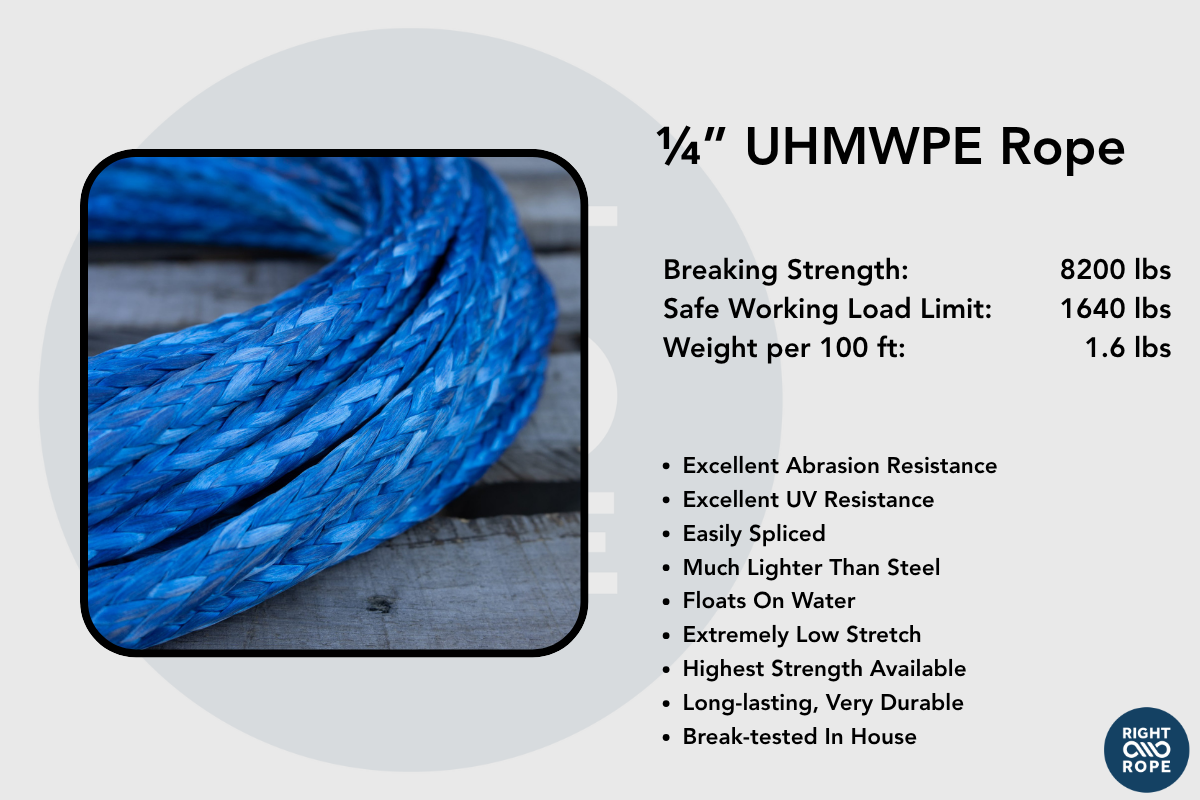
The easiest way to compare ropes is by looking at breaking strength.
Across the market, ropes of the same diameter made from Dyneema, Spectra, Amsteel-Blue, and high-quality non-branded HMPE often have remarkably similar published strength ratings.
For example, a 1/2 inch 12-strand HMPE rope from different manufacturers typically falls into a very similar breaking strength range, often within a few percentage points of one another. In practical use, most people would never notice a difference.
That means if one rope costs significantly more but offers essentially the same strength, the extra cost is often tied more to branding and marketing than to meaningful performance differences.
Why Is Non-Branded HMPE Rope Usually Cheaper?
The answer is simple. Brand names cost money.
When you buy Dyneema, Spectra, or Amsteel, part of the price goes toward licensing, marketing, and brand recognition. There is nothing wrong with that, but it does increase the cost.
When you buy a well-made non-branded HMPE rope from a trusted supplier like RightRope.com, you are paying for the rope itself rather than for the name attached to it.
For customers who care about strength, durability, and value, that is a very attractive proposition.
Is There Any Risk in Buying Non-Branded HMPE Rope?
There can be, but only if you buy from an unknown source that provides vague specifications or inconsistent quality.
The risk is not in the fact that the rope is non-branded. The risk is in buying from a seller who does not understand the product or cannot stand behind what they are selling.
That concern disappears when you buy from RightRope.com.
The HMPE rope sold on RightRope is carefully sourced, clearly specified, and selected specifically for customers who need dependable performance. We break test our HMPE rope in-house on our break test machine, so we can guarantee the SWLL advertised. The published breaking strengths are provided up front, and the rope is chosen because it performs in the real world, not because it carries a famous logo.
In practical terms, the risk of buying non-branded HMPE from RightRope is essentially nonexistent.
Why HMPE Rope Is So Popular
No matter what brand name is attached to it, HMPE offers a combination of properties that is hard to match.
It is incredibly strong, very lightweight, and easy to handle. It has extremely low stretch, making it ideal for applications where precision matters. It floats, which is a major advantage in marine and recovery situations. It also resists moisture, chemicals, and UV exposure remarkably well.
This is why HMPE rope has become the material of choice for synthetic winch lines, tow ropes, sailboat rigging, arborist lines, and industrial lifting applications.
Common Uses for HMPE Rope
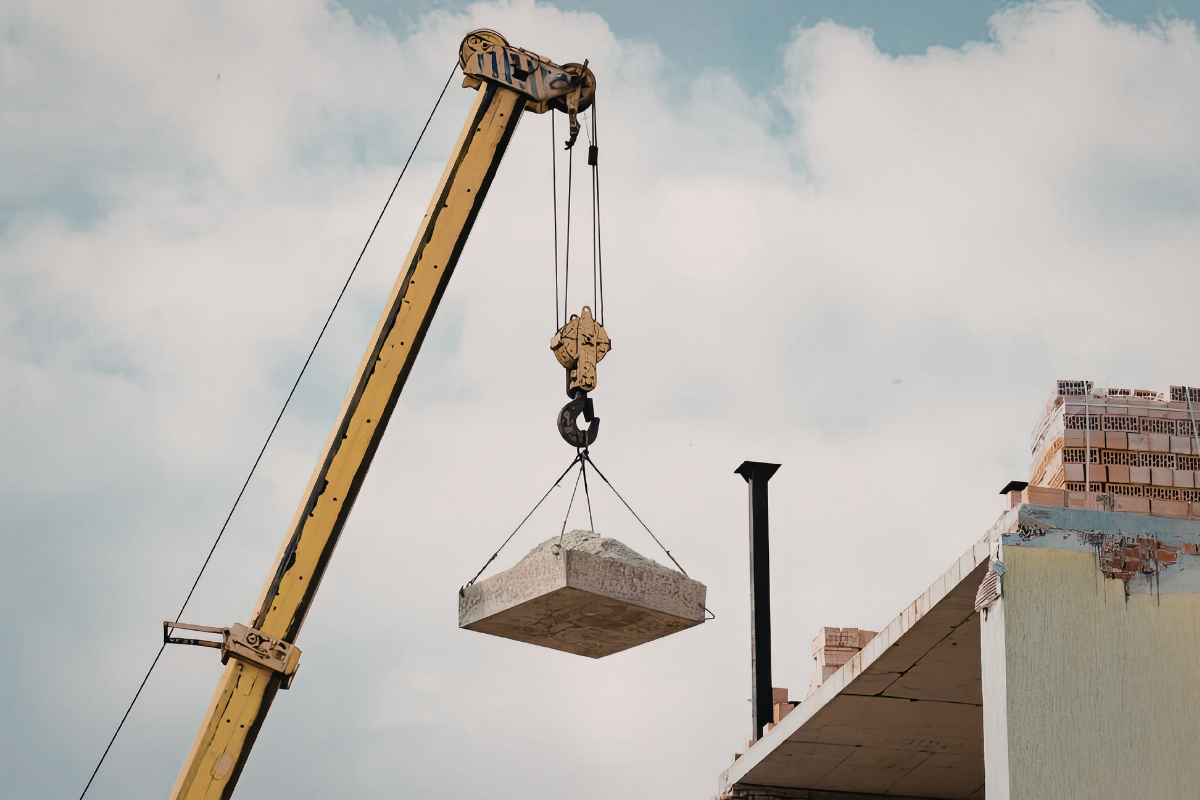
The HMPE rope available on RightRope.com is well suited for off-road winching, dock and mooring applications, sailing, towing, utility work, and countless industrial uses.
Many customers specifically search for alternatives to steel cable because they want something safer and easier to handle. HMPE rope fits that need perfectly. It offers exceptional strength without the sharp wires, kinks, and heavy weight associated with steel cable.
Is RightRope HMPE Better Value Than Dyneema or Amsteel?
In many cases, absolutely.
When you compare breaking strengths and real-world performance, high-quality non-branded HMPE rope often delivers nearly identical capabilities at a significantly lower cost.
That means you can get the strength and durability you need while keeping more money in your pocket.
For many customers, that is the best possible combination.
The Bottom Line
So, what is the real difference between Dyneema, Spectra, Amsteel, and non-branded HMPE rope?
Most of the time, the biggest difference is the brand name.
Dyneema and Spectra are well-known fiber brands. Amsteel-Blue is a respected finished rope product. All of them are built around the same family of ultra-strong HMPE fibers.
A high-quality non-branded HMPE rope, like the one available on RightRope.com, offers the same core advantages: incredible strength, low stretch, light weight, UV resistance, and excellent durability.
And because you are not paying extra for a trademarked name, you often get comparable performance at a lower price.
If your goal is to buy the strongest rope possible while getting the best value for your money, RightRope’s HMPE rope is one of the smartest choices you can make.