What Rope Floats? A Guide to Floating and Sinking Rope Materials
Estimated 0 min read
Drop a piece of rope in the water and one of two things is going to happen. It either floats or it sinks.
That sounds obvious enough, but whether a rope floats can make a surprisingly big difference when you are choosing rope for a boat, swimming pool, water rescue line, tow rope, dock project, buoy line, or just about anything else happening around water.
Quite a few ropes that are used around water are waterproof, or resistant to rot. But a rope being waterproof does not necessarily mean it floats. Polyester handles water extremely well, but it sinks. Nylon is one of the most popular marine rope materials in the world, but it sinks too.
So, what rope actually floats?
The short answer is that polypropylene, polyethylene, and HMPE or UHMWPE rope float in water. Polyester, nylon, manila, sisal, and most other common rope materials sink.
The reason comes down to something called specific gravity, but don't worry - we’re not going to turn this into a chemistry lesson.
Why Does Some Rope Float and Other Rope Sink?
Water has a specific gravity of roughly 1.0.
If the material making up a rope has a specific gravity below 1.0, it is lighter than water and tends to float. If its specific gravity is higher than 1.0, it sinks.
Polypropylene has a specific gravity of approximately 0.91, making it noticeably lighter than water. HMPE is around 0.98, so it also floats, although it sits much closer to neutral buoyancy. Ordinary polyethylene is also lighter than water.
On the other side, nylon comes in around 1.14 and polyester around 1.38, so both sink. Manila is also roughly in the 1.3 range and sinks.
That gives us a pretty simple starting point. But it does not mean floating rope is automatically better around water.
Sometimes you want a rope floating right on the surface where you can see it and grab it. Other times you absolutely want the strength, stretch, UV resistance, or abrasion resistance of a rope that happens to sink.
Let's look at the differences.
Does Polypropylene Rope Float?
Yes. Polypropylene rope floats, and it is probably the material most people should think of first when they think of floating rope.
Polypropylene has a specific gravity of about 0.91, giving it significantly more buoyancy than nylon, polyester, or even HMPE. It also does not absorb water at the fiber level, resists rot and mildew, and is relatively inexpensive.
Those properties make polypropylene especially useful when you actually need your line to stay near the surface.
This rope is commonly used for swimming pool dividers, buoy lines, small-boat tow lines, watersports lines, safety lines, and general-purpose rope around docks and water.
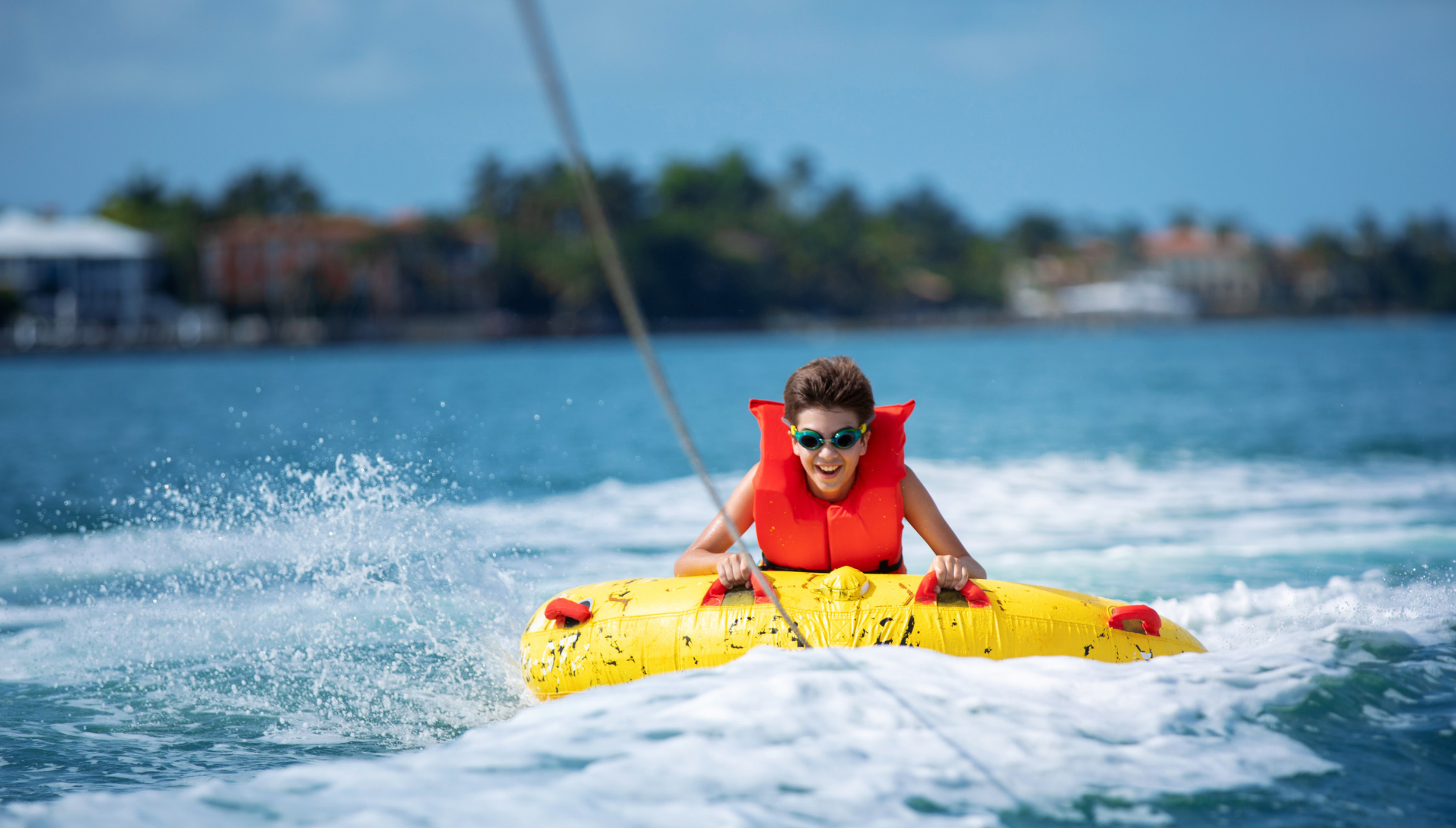
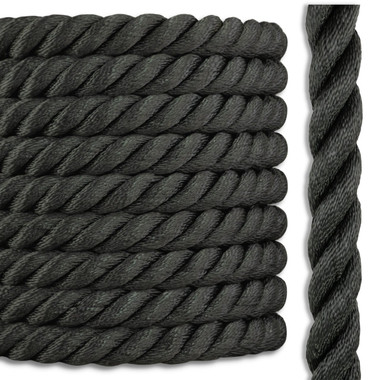
Our Polypropylene Rope is a twisted, high-tenacity rope designed for indoor and outdoor use. It floats, resists moisture and rot, and contains additional UV inhibitor to give it better outdoor life than cheap commodity polypropylene.
For swimming pools specifically, our Pool Rope uses the same basic advantage. It stays on the surface and can be used with floats to separate shallow and deep areas, create swim lanes, or divide different sections of a pool. We add considerably more UV inhibitor than you will find in a lot of basic polypropylene rope because pool rope spends its life sitting outside in sunlight and chemicals.
Polypropylene floats beautifully, but standard polypropylene generally does not have the same long-term UV resistance or abrasion resistance as polyester. If the rope is going to sit outside for years under constant sun, you need to consider that along with buoyancy.
What Is the Best Floating Rope for Towing on Water?
A floating line has one big advantage around a running boat: it is easier to see and tends to remain near the surface instead of immediately dropping down toward the propeller.
Boaters frequently choose polypropylene for tender lines and light towing for exactly that reason. Boat owners frequently keep a dedicated polypropylene tow line aboard because a floating line can reduce the chance of the line dropping directly into the propeller.
Of course any rope can potentially become tangled around a propeller. A floating line still needs to be handled correctly. You also need to consider the load.
Polypropylene can be an excellent floating utility or towing rope when properly sized, but it does not have nylon's elasticity and shock absorption. If you are towing something heavy or dealing with significant shock loads, rope selection becomes more complicated.
Never choose a tow rope simply because it floats. Make sure its construction, breaking strength, working load, stretch, and attachment points are appropriate for the job. If you need higher strength rope that floats, HMPE is just about the strongest you can get.
Does HMPE or Dyneema Rope Float?
Yes, HMPE rope floats.
That includes ropes made from UHMWPE fibers as well as branded HMPE materials commonly known as Dyneema or Spectra.
This sometimes surprises people because HMPE is incredibly strong. We tend to associate high strength with something heavy, but HMPE is just the opposite. It has a specific gravity of roughly 0.97 to 0.98, which puts it just below water. That means HMPE floats while still providing an enormous strength-to-weight ratio.
Our 12-Strand UHMWPE Rope is strong enough that a 3/4-inch rope has a breaking strength of 65,000 pounds, yet the rope is still light enough to float.
That combination is one of the reasons HMPE has become so popular for winch lines, pulling ropes, marine applications, sailing, towing, and other jobs where weight matters. It also has extremely low stretch and excellent abrasion resistance.
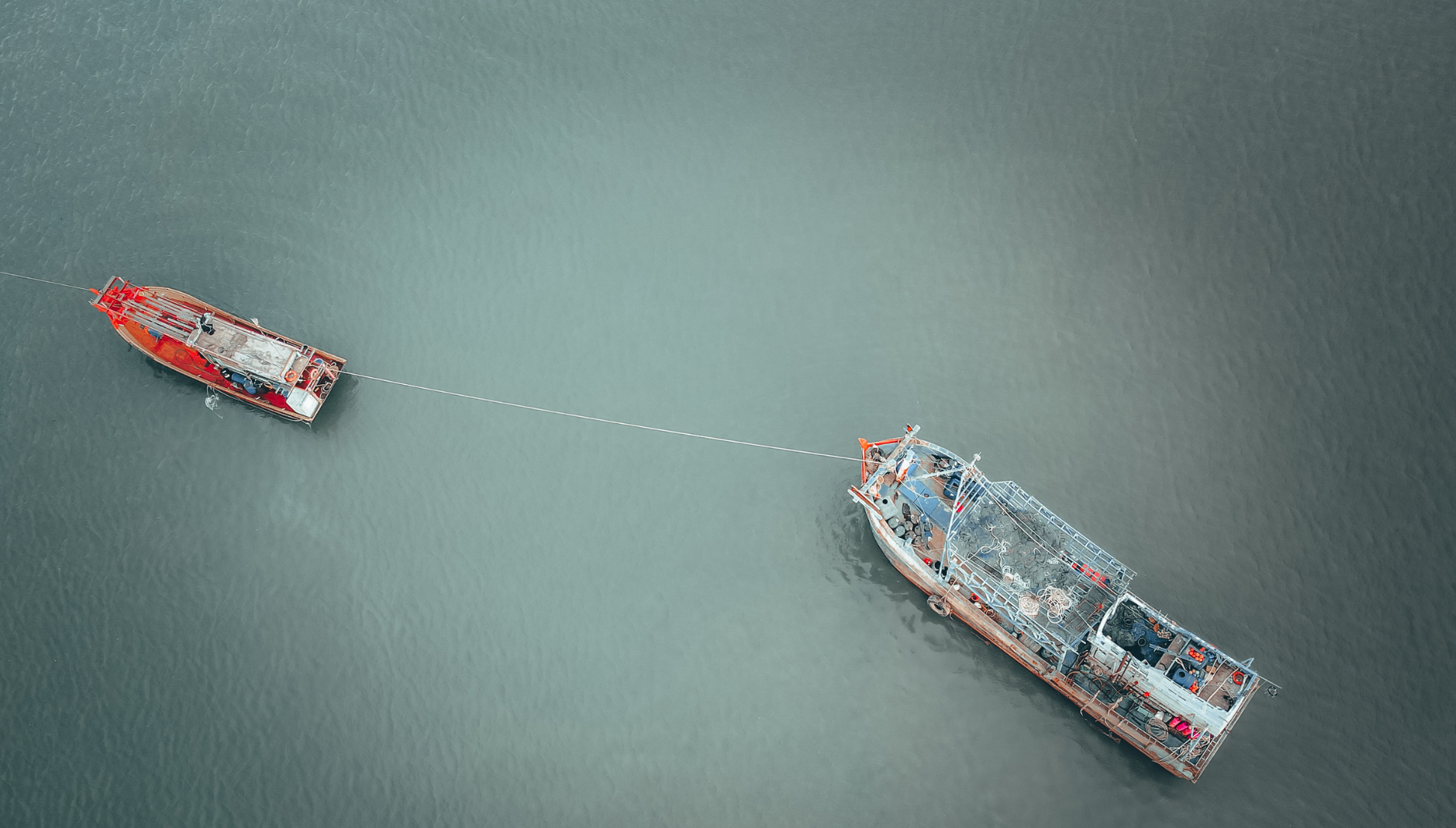
There is one important difference between HMPE and polypropylene when they are in the water. Polypropylene is considerably more buoyant.
At around 0.91 specific gravity, polypropylene tends to ride nicely on the surface. HMPE at around 0.98 is much closer to the density of water. It still floats, but it does not have that same cork-like buoyancy.
So if you just need an inexpensive, highly visible floating line for a swimming area, polypropylene makes far more sense.
If you need a seriously strong rope that also happens to float, HMPE is in a completely different league.
Does Polyethylene Rope Float?
Yes. Ordinary polyethylene rope also floats.
Polyethylene has a specific gravity below water, commonly around 0.94 to 0.95 depending on the material. It has traditionally been used for pool ropes, trail barriers, light marine uses, temporary rigging, and other general-purpose applications.
The problem is that ordinary polyethylene does not offer the same overall performance as HMPE, even though HMPE technically belongs to the polyethylene family.
That little "ultra-high molecular weight" part makes a gigantic difference.
Standard polyethylene rope is cheap and lightweight, but its strength, abrasion resistance, heat resistance, and long-term durability are relatively limited. If you just need economical floating rope, polypropylene is generally a better option. If you need serious strength and performance, HMPE is the upgrade.
We cover that difference in much more detail in our guide to Polyethylene Rope vs. UHMWPE Rope.
Does Promanila Rope Float?
Yes. This is one of the less obvious floating ropes.
Promanila, also called Unmanila or synthetic Manila rope, is designed to look similar to traditional natural Manila rope without having the same problems with moisture, rot, mildew, and deterioration.
Our Promanila uses a high-quality Danline-style synthetic construction based around polypropylene. Because the synthetic fibers are lighter than water, Promanila floats.
That can be a nice advantage for lakefront, waterfront, marina, and dock projects.
Promanila is especially popular for rope railings, dock railings, nautical landscaping, decorative fences, porch swings, and other applications where you want the old-school Manila appearance but do not want natural rope soaking up water every time it rains or gets splashed.
That does not mean we recommend Promanila as your first choice for a rescue line or heavy marine towing rope. The application still matters.
But if you are building a decorative rope railing next to the water and somebody asks, "What happens if this rope falls in the lake?"
It floats.
Does Nylon Rope Float?
No. Nylon rope sinks.
And this is a good example of why "floating" should never be used as shorthand for "good marine rope." Nylon is one of the most useful marine rope materials ever made.
It is widely used for anchor lines, dock lines, mooring lines, and applications involving shock loads because nylon stretches. That stretch helps absorb the repeated forces caused by waves, wakes, wind, and movement of a boat.
But nylon's specific gravity is approximately 1.14, making it heavier than water. So if you drop a nylon anchor line into the lake, it sinks.
That is not a problem. For an anchor rode, the ability to absorb shock is far more important than keeping the rope floating on the surface.
This is an important lesson when buying rope. Choose the properties required by the application, not one isolated feature.
Does Polyester Rope Float?
No. Polyester rope sinks.
Its specific gravity is approximately 1.38, making it considerably denser than water. But once again, that does not make polyester a poor marine rope.
Polyester has excellent UV resistance, low stretch, excellent abrasion resistance, good strength, and very little water absorption. Those characteristics make it an outstanding choice for sailing lines, rigging, outdoor installations, pulley systems, and countless other applications where floating simply is not necessary.
We use polyester in everything from our Sail-Right Double Braid to heavy-duty wire pulling rope and arborist ropes.
If your main question is, "Will polyester rope float beside my boat?" the answer is no.
If your question is, "Will polyester survive years of outdoor use and maintain predictable length under load?" that is where polyester starts looking very good.
Does Manila Rope Float?
No. Natural Manila rope sinks.
This one creates some confusion because natural rope can sometimes appear buoyant for a short period when it is completely dry and contains plenty of trapped air.
But Manila fiber itself has a specific gravity greater than water and absorbs moisture. Once thoroughly wet, Manila rope sinks. Technical rope references put Manila's specific gravity around 1.3 to 1.38.
Water is also one of Manila rope's biggest weaknesses.
Our natural Manila Rope can shrink by as much as 15 percent when wet, its diameter expands, and repeated moisture exposure can eventually contribute to rot and mildew.
If you love the natural Manila look but your project will regularly get wet, Promanila is generally the much more practical option.
What About Sisal Rope?
Sisal also sinks.
Like Manila, sisal is a natural plant fiber. It absorbs water and is not something we would choose when the goal is a long-lasting floating marine rope. Natural-fiber ropes still have their place for crafts, landscaping, rustic decoration, and applications where biodegradability or appearance matters.
They just are not the answer when somebody asks us for the best floating rope.
Is Floating Rope Better for Marine Use?
Sometimes.
If you are creating a swimming boundary, throwing a rescue line, towing a small tender, setting up a watersports line, or using a rope where visibility on the surface matters, floating rope can be a major advantage. Polypropylene is widely used in these applications specifically because it stays accessible at the surface.
But plenty of excellent marine ropes sink. Anchor lines are commonly nylon because elasticity matters. Sailing lines are often polyester because low stretch, handling, abrasion resistance, and UV resistance matter. High-performance lines may use HMPE because extreme strength and low weight matter.
You can’t just go off floating or not floating rope for marine use.
Ask yourself: Does this rope have the combination of buoyancy, strength, stretch, abrasion resistance, UV resistance, and handling that my job requires?
That is how you choose the right rope.
Can a Rope That Normally Floats Eventually Sink?
It can.
The fiber material tells you what a basic rope should do, but finished ropes can include coatings, blended fibers, covers, metal components, hardware, dirt, waterlogged contaminants, or other materials that change the overall density.
A polyester-covered HMPE rope, for example, may behave differently from a bare 12-strand HMPE line.
That is why, if buoyancy is absolutely critical to your application, you should check the specifications of the actual finished rope, not just assume that anything containing polypropylene or HMPE will behave identically.
What Is the Best Floating Rope?
For most everyday applications, polypropylene is the best general-purpose floating rope.
It is affordable, easy to handle, resistant to water, rot and mildew, and buoyant enough to stay clearly on the surface. That makes it ideal for pools, swim areas, buoy lines, watersports, light marine work, and general utility applications around water.
If strength is the priority and you need something far beyond ordinary polypropylene, HMPE or UHMWPE gives you tremendous strength, very low stretch, very low weight, and buoyancy all in the same rope.
In the unlikely situation where you want a classic looking tan rope that floats, Promanila gives you the natural nautical look while still floating.
And if floating is not actually necessary, do not force yourself into a floating material. Nylon and polyester sink, but sometimes they are still exactly the right rope for the job.
At RightRope.com, we stock rope for everything from swimming pools and dock projects to sailboats, winches, cable pulling, towing, landscaping, tree work, and industrial applications. If you know the rope needs to float but you are not sure which material or diameter makes sense, tell us what you are doing.
We would much rather help you pick the right rope the first time than sell you something just because it floats.