Sailing Safely: How To Handle Boat Ropes For Safety And Longevity
Estimated 0 min read
If there’s one thing that quietly causes more problems on boats than people like to admit, it’s rope. Not storms, not engines, not electronics. Rope. Lines that are the wrong size, worn out, handled carelessly, or trusted when they shouldn’t be. On a sailboat especially, ropes are doing real work every minute you’re underway. They’re holding sails under load, controlling power, keeping the boat where you want it, and keeping people safe. Understanding rope safety and proper rope handling is not optional if you want to sail confidently and keep your gear lasting as long as it should.
Of course, no online guide will beat hands-on learning from an experienced skipper, but we'll do our best to answer your rope related questions here. Whether you’re cruising, racing, or weekend sailing, these are the fundamentals of safe rope handling on a sailboat, explained plainly and practically, with an eye toward safety, longevity, and avoiding expensive mistakes.
Why Rope Safety Matters On A Sailboat
A sailboat is basically a floating system of controlled forces. Wind pushes on sails, sails transfer load into sheets and halyards, and those loads end up in winches, cleats, blocks, and hardware. Rope is the link between raw power and control. When rope fails, it does not fail gently. It snaps, whips, recoils, and can seriously injure anyone nearby.
Many common sailing injuries involve lines under load. Fingers get caught, hands get burned, feet get tangled, and faces get hit by recoiling sheets. Most of these accidents are preventable with basic rope safety awareness and proper handling habits.
Good rope handling is also about longevity. Sailboat rope is not cheap, and replacing halyards, sheets, dock lines, and control lines adds up fast. Handling rope correctly, choosing the right rope for the job, and caring for it properly can easily double its usable life.
Choosing The Right Rope Is The First Safety Step
One of the most overlooked safety issues on sailboats is using the wrong rope for the job. Diameter, construction, and material all matter. A rope that is too small can slip in winches and cleats. A rope that is too stiff can be hard to handle and dangerous under load. A rope with too much stretch can shock load hardware and fittings.
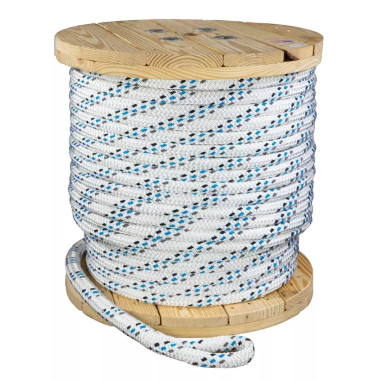
For most sailboat applications, double braid rope is the standard for good reason. Polyester double braid is strong, handles well, resists UV, and works smoothly through blocks and winches. Our Sail-Right Rope is a great pre-shrunk (set) double braid polyester that doesn't hockle or kink, comparable to expensive brand-name sailing lines. It is commonly used for sheets, halyards, and control lines on cruising and performance boats alike.
High performance materials like HMPE are becoming more popular for halyards and running rigging because of their low stretch, but they require proper handling and compatible hardware. Using a high strength rope without understanding its behavior can actually increase risk if loads are not managed properly.
People often ask how strong sailing rope really needs to be. The answer is that safe working load limit matters more than breaking strength. Rope safety is about staying well below maximum loads. Safe working load limit can change based on conditions of the rope. Under normal use conditions, SWLL is about 20% of breaking strength. This gives a margin for shock loads, wear, knots, and real world conditions. To learn more about safe working load limit, and how to calculate the impact of different factors like knots, bends, chafing, and wear (which can all weaken rope), check out our blog on general Rope Safety.

Safe Handling Of Ropes Under Load
Any rope under tension deserves respect. On a sailboat, sheets and halyards can be under thousands of pounds of load even on modest sized boats. One of the most important rope safety habits is staying out of the snap back zone. If a loaded line were to fail, it will recoil violently along its length. Standing in line with a loaded rope is asking for trouble.
Hands and fingers should never be wrapped around a loaded line. It is tempting to grab a rope for balance or control, but one sudden load can pull a hand into a block or winch faster than you can react. Always grip lines with an open hand and be ready to let go if something goes wrong.
Gloves are a simple but often ignored safety tool. Handling sailing rope without gloves increases the risk of rope burn, especially when easing loaded sheets or dock lines. A good pair of sailing gloves gives grip, protects skin, and improves control when lines are wet or under tension.
Communication is another overlooked safety factor. Many rope related accidents happen because someone does not know a line is about to be loaded or released. Clear calls before trimming, easing, or hoisting sails help everyone stay aware of what is happening.
Proper Coiling And Stowing On A Boat
Poor rope management creates tripping hazards, tangles, and delays when you need a line quickly. On a sailboat, lines should always be coiled or flaked neatly when not in use. This is not about looking tidy. It is about safety and function.
Coiling rope properly helps prevent kinks and twists that weaken fibers over time. It also ensures the rope can run freely when deployed. A poorly coiled line can snag at exactly the wrong moment, whether you are docking in a crosswind or reefing a sail in rising breeze.
Lines should be stowed dry whenever possible and kept out of standing water. Constant moisture promotes mildew and accelerates internal wear. Keeping ropes off the deck when not in use also reduces UV exposure, which is one of the main causes of rope degradation on sailboats.
Knots, Cleats, And Hardware Safety
Knots reduce rope strength, sometimes significantly. A poorly chosen or improperly tied knot can reduce strength by up to 60%! For critical sailing applications, splices are generally stronger and safer than knots. That is why eye splices are commonly used on sheets and dock lines.
Speaking of knots, not all knots are created equal. Some knots are more likely to untie themselves under repeated force applied. A reef knot will come untied after about 20 pulls, whereas a double sheet bend will take almost twice as much abuse before spilling.
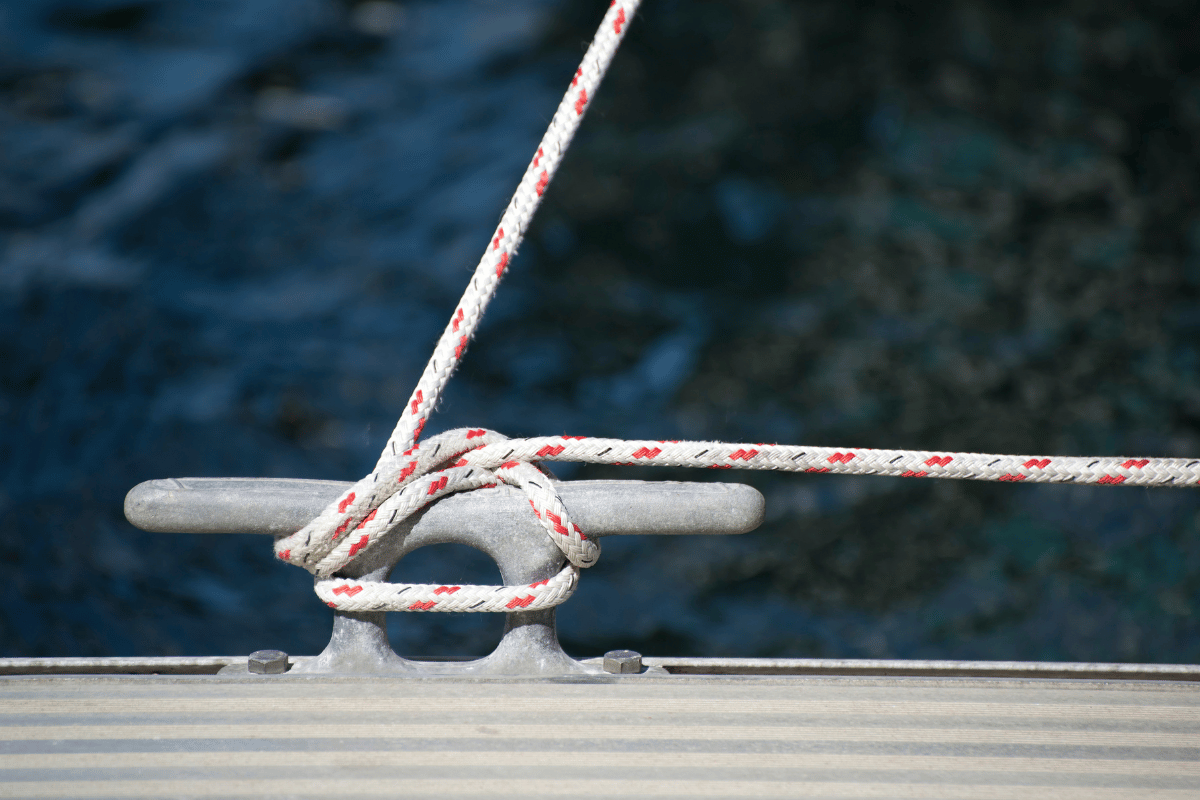
Cleating a line properly is another key safety skill. A poorly cleated rope can slip suddenly or jam under load. Learning correct cleat hitches and using self tailing winches, if possible, reduces the risk of sudden releases and line failure.
Hardware compatibility matters too. Rope diameter should match winches, clutches, and blocks. Rope that is too small may slip and glaze. Rope that is too large may not seat properly and can create uneven loading. Both situations increase wear and safety risk.

Inspecting Sailing Rope For Wear And Damage
Regular inspection is one of the easiest ways to prevent rope failure. Sailboat ropes should be checked for chafe, glazing, flattened spots, discoloration, and stiffness. These are signs that fibers are breaking down internally even if the rope still looks usable at a glance.
Chafe is the number one killer of sailing rope. Any place a line runs over a block, through a fairlead, or around a winch is a potential wear point. Chafe protection, repositioning leads, or rotating lines end for end can significantly extend rope life.
If a rope feels stiff, crunchy, or brittle, it is usually past its prime. UV damage, salt buildup, and internal fiber fatigue all contribute to this. When in doubt, replace the line. Rope is cheaper than medical bills or damaged rigging.
How To Clean And Care For Boat Ropes
Salt and dirt grind away at rope fibers over time. Cleaning sailing rope periodically helps restore flexibility and prolongs strength. Fresh water rinsing goes a long way, especially after heavy use or salty conditions. For deeper cleaning, mild soap and gentle agitation can remove embedded grit.
Ropes should be allowed to dry fully before storage. Storing wet rope encourages mildew and odor and can weaken fibers over time. Avoid harsh chemicals, bleach, or high heat, which can damage synthetic fibers commonly used in sailing rope.
Winter is an ideal time for rope maintenance. Taking lines home, washing them, inspecting for wear, and planning replacements before spring can save time and money when the season starts.
Common Rope Safety Questions
Many people ask how long sailing rope lasts. The honest answer is that it depends on use, exposure, and handling. Well-cared for polyester double braid used for cruising can last many seasons. Lines exposed to constant sun, heavy loads, and friction may need replacement much sooner.
Another common question is whether old rope can still be used safely. Age alone is not the issue. Condition is. A ten year old rope that has been lightly used and stored properly may be safer than a two year old rope that has been abused.
Folks also wonder whether stronger rope is always better. Stronger rope can be safer when used correctly, but it can also mask problems. Hardware, cleats, and winches have limits. Using rope far stronger than the rest of the system can shift failure to fittings or deck hardware instead.
Building Good Rope Habits On Board
Safe rope handling is mostly about habits. Keeping lines organized, inspecting them regularly, handling them with respect under load, and choosing the right rope for each application makes sailing smoother and safer.
Good habits also build confidence. When you trust your lines, you sail better. You dock more calmly. You reef earlier and more effectively. You avoid rushed decisions that lead to accidents.
Rope is one of the simplest tools on a sailboat, but it carries enormous responsibility. Treat it like critical equipment, because it is.
Using Your Sailing Rope Safely
Sailing safely starts with understanding the forces at work and respecting the gear that controls them. Rope is not just something to pull on. It is the backbone of sail control, boat handling, and crew safety.
By choosing the right sailing rope, handling it correctly, inspecting it often, and caring for it properly, you protect both your boat and the people on it. These are not complicated skills, but they do require attention and consistency.
Good rope handling is part of seamanship. Learn it, practice it, and pass it on to everyone who sails with you. Your boat, your wallet, and your crew will all be better for it.