Promanila vs. Manila vs. Polyester: The Ultimate Deck Railing Showdown
Estimated 0 min read
If you’re building a deck railing with rope, you’re probably after a certain look. Maybe it’s that coastal, nautical vibe. Maybe it’s something rustic and natural. Or maybe you just want something tough that will hold up outside without turning into a mess in six months.
Here’s the thing most people don’t tell you upfront. Not all rope is built for outdoor railing. Some of it looks great on day one and falls apart by the end of the season. Other rope might not have that classic look, but it will outlast your deck.
So let’s break it down the right way. We’re going to examine Promanila vs. Manila vs. Polyester ropes for deck railing. If you’re considering anything else… think again. Here’s what actually works, what lasts, and what you should avoid if you don’t want to redo your railing next year.
Why Rope Choice Matters for Deck Railings
When people search for “best rope for deck railing” or “outdoor rope railing ideas,” they’re usually thinking about appearance first. That’s fair. Rope railings are a design feature. They need to look good.
But your rope is going to live outside. It’s going to deal with sun, rain, humidity, temperature swings, maybe even snow depending on where you live. If you choose the wrong material, it’s not just going to fade. It can weaken, fray, grow mold, or even become unsafe.
The best rope for outdoor railing needs to balance three things. It needs to look right, hold its strength, and handle the weather.
That’s where these three options come in.
Manila Rope for Deck Railing: The Classic Look
Manila rope is the one everyone pictures first. It’s the original. Natural fiber made from abaca plant fibers, with that light tan, slightly rough texture that screams nautical.
If you’re going for a traditional or beach-style deck, manila rope checks the box visually better than anything else.
The problem is durability.
Manila rope does not like being outdoors long term. It absorbs water, which leads to swelling and shrinking. Over time it can rot. It is also more prone to mold and mildew, especially in humid climates or shaded decks that don’t dry out quickly.
Sun exposure doesn’t help either. UV rays break down natural fibers. You’ll start to see fuzzing, weakening, and eventually structural failure.
People often search “can manila rope be used outside” or “how long does manila rope last outdoors,” and the honest answer is that it depends on conditions, but it is usually not a long-term solution. Despite its long history as a mariner’s rope, manila rope is just much better for indoor use compared to modern materials. If you’re okay with replacing it about once a year and you want the most authentic natural look possible, it can work. Just know what you’re signing up for. We don’t recommend Manila rope for outdoor projects.
Promanila Rope: The Look of Manila Without the Headaches
Promanila rope exists for one reason. To give you that same natural manila appearance, but with modern synthetic performance.
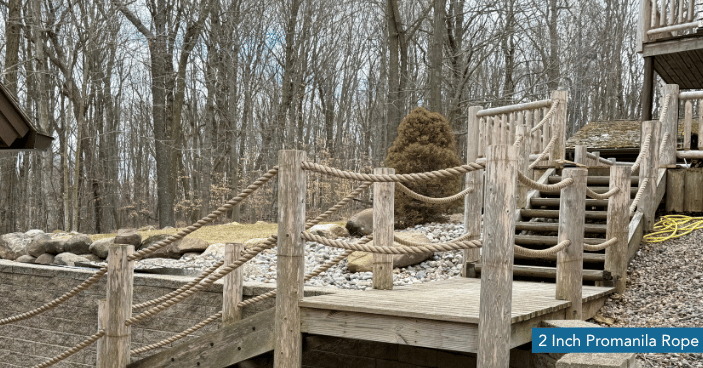
This is typically a polypropylene-based rope designed to mimic the color and texture of real manila. At a glance, most people cannot tell the difference.
Where it really separates itself is in durability.
Promanila does not absorb water the way natural fibers do. That means no rot, far less mold risk, and consistent performance in wet conditions. It also holds up significantly better to UV exposure, especially when it’s made with strong UV inhibitors.
If you’ve ever heard someone say that “synthetic manila gets destroyed in the sun,” they were probably dealing with a low-quality version. Not all promanila is created equal. Our Promanila is a danline construction, a premium construction that has much higher UV and chemical resistance, as well as a higher melting point than regular tan polypropylene ropes that you see being sold as “promanila.”
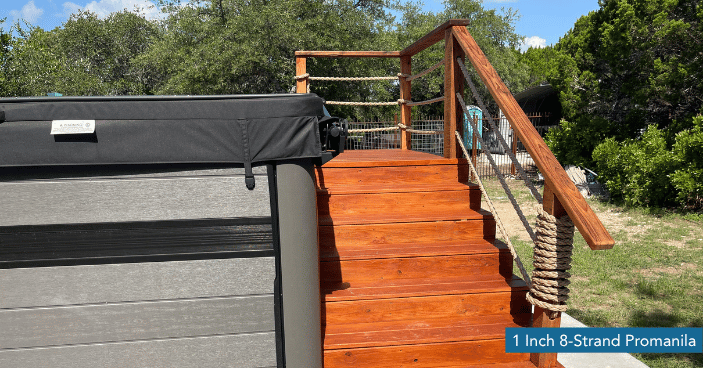
For deck railing applications, promanila hits a sweet spot. It gives you that classic rope railing look while being far more practical for long-term outdoor exposure. There are design options such as a fancier 8-strand braid, and it’s just an all-around good performer.
This is why you’ll see it come up again and again in searches like “best rope for outdoor railing that looks natural” or “manila rope alternative for deck.”
However, if your rope will be in full-sun most of the time, we recommend you go with a twisted polyester or combo polyester, as these are the most UV resistant ropes out there.
Polyester Rope: Best In Full-Sun
Polyester is going to be the ultimate in durability, but you do lose a little bit of the “natural rope look.”
If your priority is strength, longevity, and minimal maintenance, polyester is hard to beat.
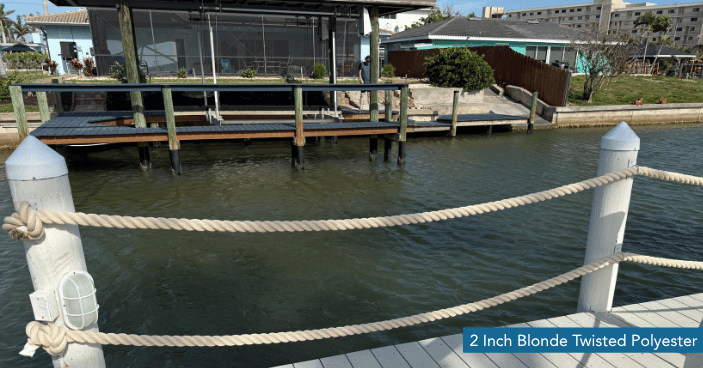
Polyester has excellent UV resistance, which makes it ideal for full sun exposure. It does not absorb much water, so it resists rot and mildew. It also maintains its strength over time better than most materials, even in harsh outdoor conditions.
You’ll often see polyester used in marine environments, which should tell you everything you need to know about its durability.
The trade-off is appearance.
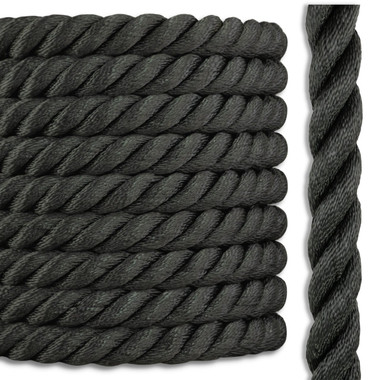
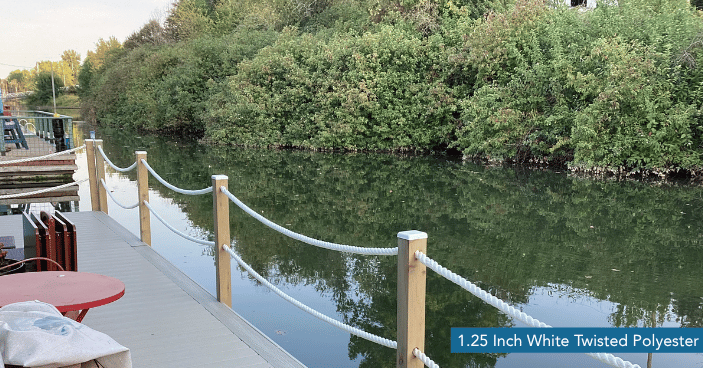
We carry Polyester rope in black, white, and a tan that looks as close as you can get to the natural nautical look in polyester. It comes in a twisted style or as an 8-strand, for a slightly more upscale look. We also have a Black Combo Polyester that is an incredible value due to the blend of polyester over polyolefin fibers. Overall Polyester has a smoother, more modern look compared to the fuzzy, natural texture of manila or promanila.
For some decks, that’s actually a benefit. If you’re going for a clean, modern, or high-end look, polyester can elevate the design. For others, especially rustic or coastal styles, it may not fit the aesthetic as well.
Still, if someone asks “what is the most durable rope for deck railing,” polyester is always in the conversation.
Promanila vs Manila vs Polyester: What Actually Wins?
This is where most people want a simple answer.
If your priority is pure aesthetics and you want the most authentic natural fiber look possible, manila rope… is still not a great option for outdoors. If you’re totally sold on it, just understand that you are trading durability for appearance.
If you want almost the same look but need something that can actually survive outdoors without constant replacement, promanila is a much more practical choice. It’s the closest thing to a best-of-both-worlds option.
If your main concern is longevity, strength, and minimal maintenance, polyester is the clear winner. It may not look like traditional rope, but it will outperform both manila and promanila in harsh conditions.
Most homeowners building rope deck railings end up landing on promanila because it gives them the look they want without the maintenance headache.
What Size Rope Is Best for Deck Railing?
Another common question is rope diameter.
People search for “what size rope for deck railing” all the time, and the answer depends on both safety and appearance.
If you’re using a 4x4 post, we recommend 1.25 or 1.5 inch promanila (or polyester). If your post is 6x6, up to 2.5 inches can look great. A thicker rope also tends to look more premium and feels more solid when used as a railing barrier.
Spacing matters too. If you’re running horizontal lines, you need to keep gaps small enough to meet safety expectations, especially if kids are around.
Wondering how much rope you need for your rope railing? If you want more tips for building your rope railing, watch our youtube tutorial here:
How to Build a Rope Fence | Make a Rope Railing | DIY Demonstration
How Long Will Rope Deck Railing Last?
This comes down to material choice.
Manila rope may last a season or two in mild conditions, but in wet or sunny environments it can degrade much faster.
Promanila rope can last several years outdoors when it’s properly installed. UV exposure will eventually take a toll, but it holds up far better than natural fiber.
Polyester rope can last many years with minimal degradation. It is one of the most durable options you can choose for outdoor use.
If you’re searching “how long does rope railing last,” the real answer is that it depends on what you install in the first place.
Does Rope Railing Require Maintenance?
Everything outdoors requires some level of maintenance, but the amount varies.
Manila rope needs the most attention. It should be kept as dry as possible and may need replacement as it breaks down.
Promanila requires less maintenance. Occasional cleaning and checking for wear is usually enough.
Polyester is the lowest maintenance option. It resists most of the issues that affect other ropes and can be cleaned easily when needed.
If you want a set-it-and-forget-it solution, polyester is hard to beat.
Installation Tips That Make a Difference
No matter which rope you choose, how you install it matters.
Proper tension is key. Rope should be tight enough to function as a barrier but not so tight that it puts unnecessary stress on the fibers.
Using the right hardware also makes a difference. Stainless steel eye bolts and solid brass brackets will prevent corrosion and keep your railing system secure over time.
End finishing is another detail that gets overlooked. Synthetic ropes should have their ends properly melted or secured to prevent fraying. Natural ropes may need whipping to keep them intact. If you order from us, we’ll make sure your rope comes ready.
These small details can extend the life of your rope railing and keep it looking clean.
Watch our youtube video for more tips and guidance:
How to Build a Rope Fence | Make a Rope Railing | DIY Demonstration
Choosing the Right Rope for Your Deck
If you’re building a rope deck railing, you’re balancing style and performance whether you realize it or not.
Manila rope gives you the classic look but comes with real durability limitations outdoors.
Promanila gives you that same look with far better weather resistance, making it one of the most popular choices for deck railing projects.
Polyester steps in when durability and longevity matter most, offering a clean, strong solution that can handle just about anything you throw at it.
If you want the straightforward answer most people are really looking for when they type “best rope for deck railing”, it usually comes down to this.
Go with promanila if you want the traditional look and solid performance.
Go with polyester if you want maximum durability and minimal maintenance.
And only go with natural manila if you understand the trade-offs and are okay replacing it over time.
Pick the right rope from the start, and your deck railing won’t just look good. It will stay that way.