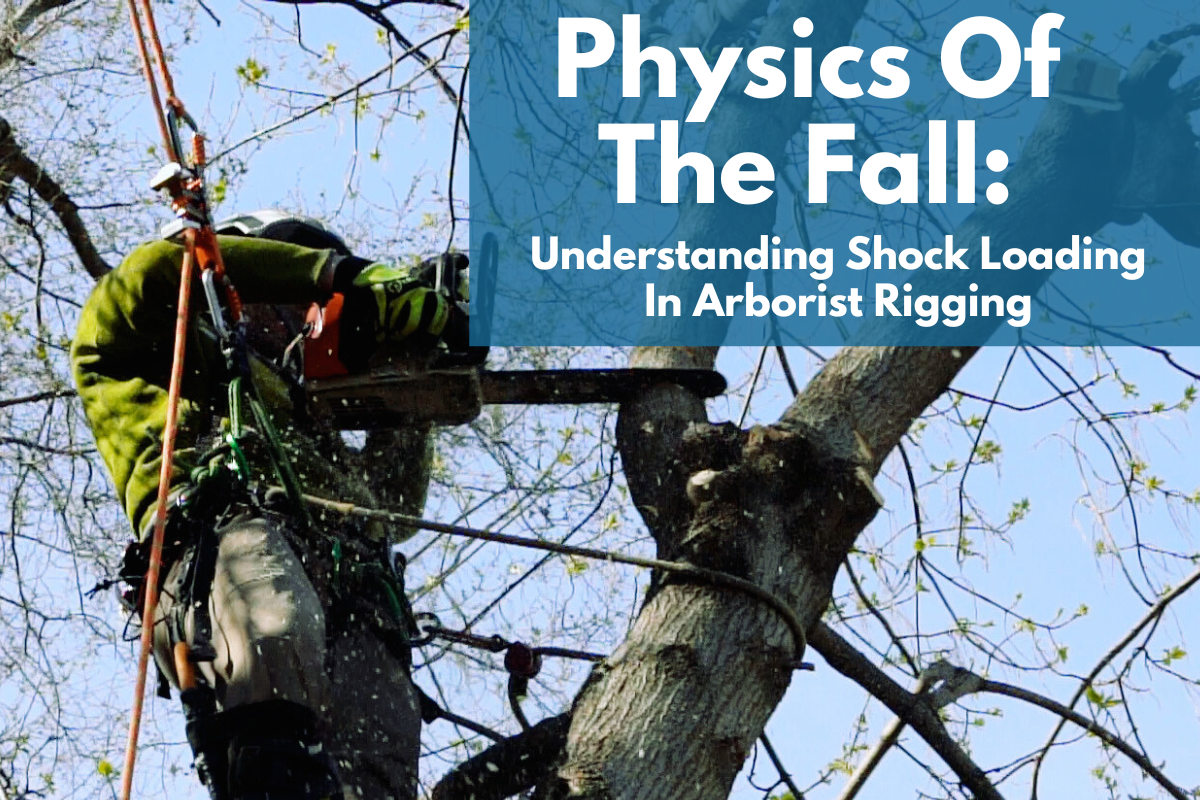
Physics of the Fall: Understanding Shock Loading in Arborist Rigging
Estimated 0 min read
If you have been in the tree care industry for more than a week, you have probably heard a sound that made your stomach drop. It is that violent "thwack" when a heavy piece of wood hits the end of a rigging line and the whole tree shudders like it is trying to jump out of the ground. That sound is the sound of shock loading. In the world of arborist rigging, shock loading is the invisible monster that snaps ropes, explodes blocks, and pulls out anchor points. Most guys understand that dropping a big log is dangerous, but very few truly grasp the math happening behind the scenes. We are going to talk about the physics of the fall in a way that actually makes sense for the guy holding the chainsaw or the groundie sweating over the Port-a-Wrap. This isn't about being a scientist; it is about knowing how much force you are actually putting on your gear so you can make it home for dinner in one piece.
The Great Misconception of Weight
The biggest mistake people make is thinking that a five hundred pound log only puts five hundred pounds of force on the rope. That is dead wrong. When that log is sitting still on the stump, it has static weight. As soon as it starts falling, gravity takes over and that log starts building kinetic energy. The moment the rope catches that wood, all that energy has to go somewhere. This is where we talk about peak force.
Depending on how much slack is in the line and the type of rope you are using, that five hundred pound log can easily generate three thousand or even five thousand pounds of force the instant it stops. This is the difference between a static load and a dynamic load. If your rigging system is only rated for the static weight of the wood, you are playing a very dangerous game of Russian roulette with your equipment.
The Role of Fall Distance and Slack
The distance a log falls before the rope starts to do its job is the single most important factor in calculating shock load. You might call this the fall factor. If you have a rigging block set ten feet below the cut and you drop a log, that wood is going to fall twenty feet before the rope even begins to tighten. By the time the rope catches it, that log is moving fast. The further that wood falls, the more velocity it gains, and the more energy your rope has to absorb.
This is why negative rigging is so much more taxing on gear than positive rigging. In a positive rigging scenario, the load is already tensioned, so there is no "free fall" and therefore very little shock load. When you are forced into a negative rigging situation where the wood must fall past the anchor point, you have to be extremely disciplined about managing your slack. Every inch of extra slack you leave in the line is adding hundreds of pounds of potential force to your terminal tackle.
Understanding Rope Elongation and Elasticity
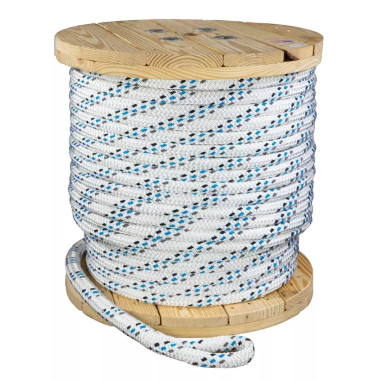
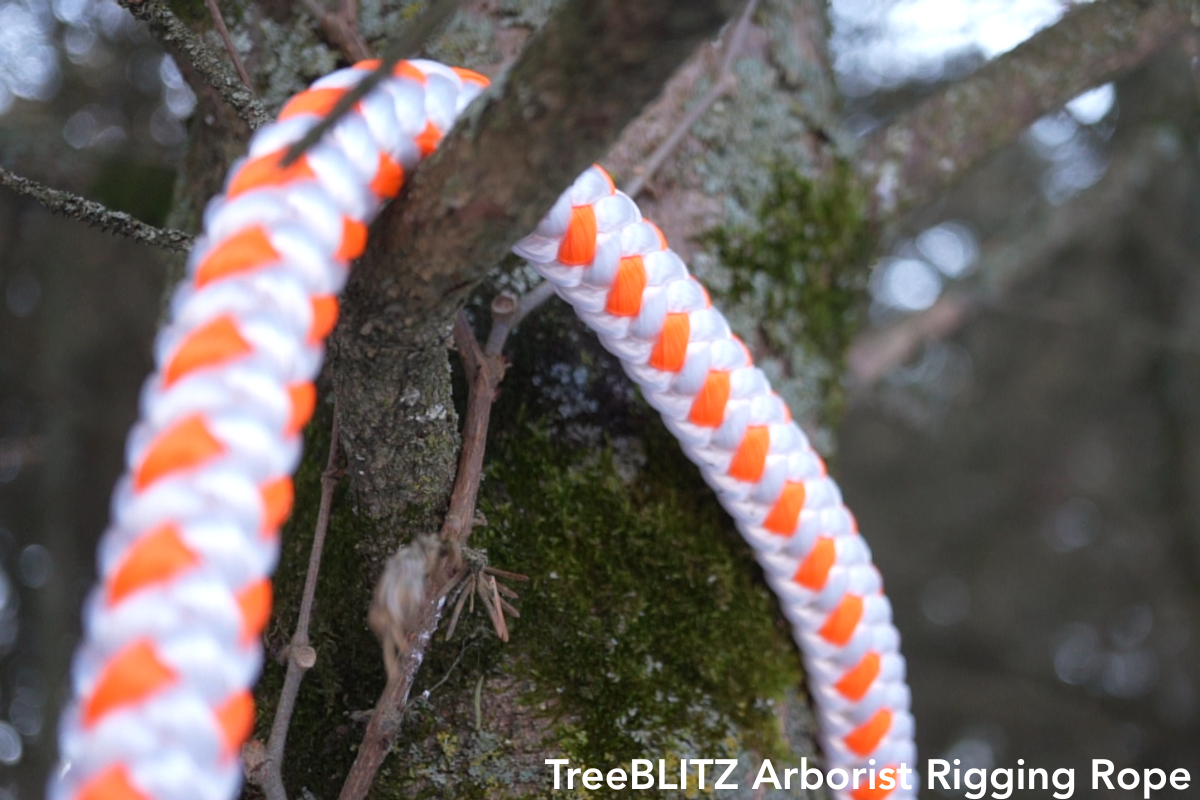
Not all ropes are created equal when it comes to catching a falling branch. This is where the choice between a static rope and a dynamic rope becomes a life-or-death decision. Think of your rigging line like a rubber band versus a piece of steel wire. A rope with higher elongation, like our TreeBLITZ Arborist Rigging Rope that has a Polyester Cover for abrasion resistance and a Nylon Core for stretch, acts like a shock absorber. As the log hits the end of the line, the rope stretches, which increases the amount of time it takes for the log to stop. If you increase the time it takes to stop an object, you decrease the force felt by the system.
This is why we use specific arborist rigging lines that have a bit of "give." If you were to use a zero-stretch high-modulus rope like UHMWPE for catching heavy wood, the stop would be nearly instantaneous. Without that stretch to absorb the energy, the force would go straight into your hardware and the tree itself, possibly resulting in a catastrophic failure.
The Anchor Point and the Leverage of the Tree
We often spend so much time worrying about the rope that we forget about the most important part of the system: the tree. When you catch a piece of wood in a rigging block, you are creating a giant lever. If your block is set at the very top of a tall, skinny spar, the force of that shock load is multiplied by the length of the trunk.
This puts massive stress on the root system and the lower portion of the trunk. Furthermore, the angle of the rope through the block creates a "resultant force." If the rope goes up from the ground, through the block, and back down to the log, the force on that block and its sling is actually double the tension in the rope. If your rope is experiencing five thousand pounds of shock load, your block and its attachment point might be feeling ten thousand pounds. This is why your slings and blocks need to have a significantly higher breaking strength than your main rigging line.
Friction is Your Best Friend and Worst Enemy
To manage these massive forces, we use friction devices like bollards or Port-a-Wraps. Friction allows the ground worker to "let the rope run" slightly. This is the ultimate secret to reducing shock load. By letting the rope slip through the friction device just a few inches during the catch, the groundie is effectively increasing the "stopping distance" of the log. This bleeds off energy through heat rather than snapping the rope. However, this creates a new problem: heat.
Synthetic fibers melt. If you are catching heavy wood and letting it run, the friction generates intense heat that can glaze the fibers of your rope. A glazed rope is a dead rope. You have to find that sweet spot where you are letting the rope run enough to save the tree and the gear from shock load, but not so much that you cook your line or lose control of the load entirely.
The Math of Terminal Velocity in the Canopy
A lot of guys ask me how to estimate these forces without carrying a calculator up the tree. A good rule of thumb is the 10-to-1 safety factor. If you think a log weighs two hundred pounds, you should be using a system that can handle two thousand pounds of force. But even that can be misleading if the fall distance is great.
You also have to consider the "cycles to failure" on your gear. A rope might be rated for ten thousand pounds, but every time you subject it to a heavy shock load, you are micro-tearing the internal fibers. The rope gets weaker with every drop. Just because it held yesterday doesn't mean it will hold today. This is why we preach about constant inspection. You are looking for flat spots, stiff sections, and discoloration that indicates the rope has been "over-stressed" by a shock load event. To learn more about inspecting ropes, read our Ultimate Rope Inspection Checklist.
Hardware Limitations and Potential Projectiles
It is easy to focus on the rope and the tree, but the hardware is often the weakest link in the chain. Carabiners, blocks, and rings all have a Working Load Limit (WLL) and a Minimum Breaking Strength (MBS). The WLL is usually only a small fraction of the MBS. When you shock load a system, you are almost always blowing right past the WLL. And metal doesn't stretch like rope does; it deforms or it shatters.
If a block or a carabiner fails under a shock load, it becomes a piece of shrapnel traveling at a hundred miles per hour. I’ve heard stories of blocks going through truck windshields because a guy thought his "heavy duty" hardware was invincible. You need to match your hardware to the potential shock loads, not just the static weight of the timber.
Modern Technology and Load Monitoring
In the last few years, we have seen the rise of load cells and digital monitoring in the field. Some of the high-end outfits are now using devices like the Impact Block which has a built-in sensor to tell you exactly how many kilonewtons of force were generated during a drop. This data has been a wake-up call for the industry. It has proven that many have been underestimating shock loads for decades.
While you might not need a thousand-dollar digital block for every job, you should pay attention to the data these tools have produced. They show that even a small limb falling a few feet can generate forces that exceed the working load limits of standard hardware. It teaches us to be humble and to over-build our systems whenever possible.
Practical Tips for Reducing Impact
If you want to keep your gear in the game longer and keep your ground crew safe, you need to implement strategies to minimize the physics of the fall.
First, always try to minimize the fall distance. Set your rigging points as high as possible relative to the cut.
Second, communicate clearly with your ground worker. A groundie who "dead pips" a log (holds it with no movement) is putting maximum stress on the system. A groundie who knows how to give a "soft catch" is worth their weight in gold.
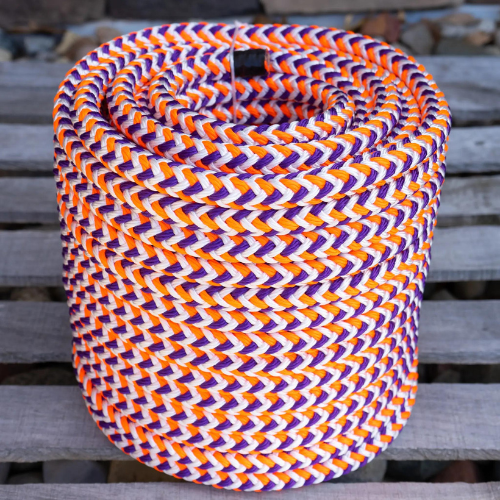
Third, use the right rope for the right job. Don't use a low-stretch bull rope for negative rigging if you can avoid it. Use something with a bit of energy absorption (V-Hex and TreeBLITZ are our top picks). Finally, don't be afraid to take smaller pieces. It takes a little more time, but it reduces the potential energy in the system and keeps the physics on your side.
The Importance of the Rigging Plan
Every time you approach a tree, you should have a mental or written rigging plan that accounts for shock loading. Ask yourself: if this rope fails, where does the wood go? If this block pulls out, where does the hardware fly? If the tree snaps at the rigging point, which way is it going to fall? Understanding the physics of the fall means respecting the power of gravity and the limits of man-made fibers. We make some of the strongest ropes in the world, but even the best line can be defeated by a lack of common sense and a big enough log. Rigging is a game of management: managing weight, managing friction, and managing energy.
Final Thoughts on Working with Gravity
At the end of the day, gravity doesn't take a day off and it doesn't care about your deadlines. The physics of the fall are constant and unforgiving. By understanding how shock loading works, you move from being a "wood dropper" to a professional arborist. You start to see the forces in your mind before you ever make a cut. You learn to listen to what your rope and your tree are telling you. Stay safe, keep your eyes on your gear, and remember that the most important thing you can bring to a job site is a healthy respect for the math of a falling log. If you treat your rigging system with the respect it deserves, it will keep you and your crew safe for years to come.