


Handheld Hot Cutter
$49.99

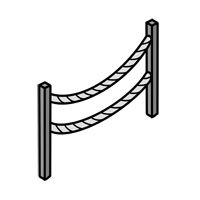
Rope Fence
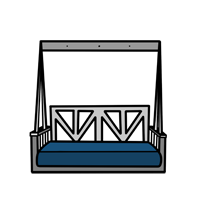
Bed Swing
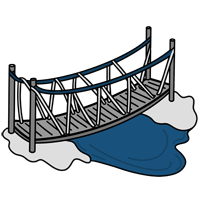
Rope Railing
Handheld Hot Cutter
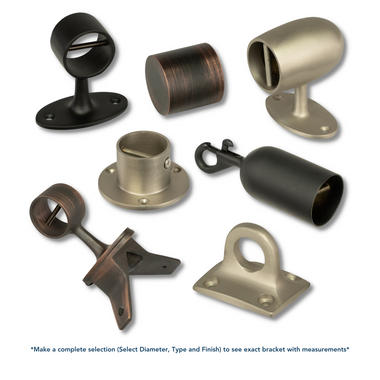
Rope Brackets

Bed Swing Hanging Kit

Lag Screw

Stainless Steel Eye Bolts

Rope Tape
 Play Video: How to Build a Rope Fence | Make a Rope Railing | DIY Demonstration
How to Build a Rope Fence | Make a Rope Railing | DIY Demonstration
 Play Video: DIY Bed Swing for Porch | Hung with Rope
DIY Bed Swing for Porch | Hung with Rope
 Play Video: Promanila vs. Manila Rope | Unmanila or Natural Fiber Hemp?
Promanila vs. Manila Rope | Unmanila or Natural Fiber Hemp?
Our Promanila rope is our most popular, outdoor decorative rope. It is a beautiful alternative to natural-fiber Manila rope - giving you all the upsides, including that nautical look!
Premium: Our Promanila rope (also known as unmanila rope) is a beautiful, synthetic, alternative to the natural plant fiber, Manila rope, that has traditionally been used in nautical decor. Our Promanila is very high-quality, and is manufactured as a 'danline rope' which gives it all it's great qualities -- including: extra UV inhibtors and resistance to moisture and chemicals.
If you've ever seen Promanila rope that has faded and splintered, that is due to UV degradation, and Promanila rope that is not made with a danline construction is only 'tan polypropylene' and it will degrade very quickly in the sun and show signs of splintering pretty early-on. When choosing Promanila rope, look for one that is constructed as a danline rope for the longest-lasting product.
Full-Sun Alternative: Additionally, if your rope will be exposed to full-sun most of the time, we recommend an upgrade to Twisted Polyester Rope, which resists UV even better, and will last significantly longer for your investment into your outdoor rope project. We have a unique color of Twisted Polyester (Blonde) that we have specially manufactured for our customers who want the longest-lasting rope with the closest color to the tan of Promanila. Our Blonde Twisted Polyester is slightly lighter in color than our Promanila and is the best alternative for use in a full-sun environment. Twisted Polyester is the best outdoor rope for regions similar to Florida, and other places with lots of sun.
Manila Alternative: If you love the look of natural Manila rope but you don’t like some of the disadvantages, and your rope will not be exposed to full-sun most of the time, Promanila rope is for you!
Some of the advantages of Promanila compared to natural Manila are that it feels smoother and does not mildew, rot, shed, fade, shrink or harden. Our premium Promanila rope has excellent resistance to most chemicals, marine growth and petroleum products. It lasts up to three times longer than Manila and maintains its coloring for longer. The tensile strength of Promanila is nearly 50% stronger than natural Manila rope even though it is lighter and floats on water.
Although Promanila rope is better in almost every way, and serves as a replacement for the same applications, there is just something special about natural fiber Manila rope, and if you prefer it, we have all sizes and lengths in stock.
This premium grade, UV resistant rope is also known as synthetic Manila rope, Un Manila rope, Pro Manila rope, Poly Manila rope, Tan Pro, Poly Tan, and Un-Manila. Although it does last longer than natural Manila, it does eventually break down in the sunlight. For the longest-lasting outdoor rope, we recommend our Twisted Polyester Rope.
FAQ's Promanila Rope
Question: What is a "standard end" on a Promanila Rope?
Answer: A "Standard end" for a Promanila Rope is wrapped in brown electrical tape and hot-cut to sear and seal the end of the rope. The electrical tape may be kept on, or taken off, prior to use. The electrical tape keeps the rope together while being hot-cut. After the end cools, the electrical tape may be taken off to improve the aesthetic.
Question: Is Promanila Rope fire rated?
Answer: No, Promanila Rope is made of synthetic fibers and is not fire rated or fire retardant. It will not absorb any fire treatments. For indoor installations, the natural fiber Manila Rope can be treated (by a 3rd party) with fire retardant.
Question: What size rope should I use for my fence?
Answer:
It depends on the size and style of your posts.
For the best look:
- For 4x4 square posts, we recommend 1-1/2" rope
- For 6x6 square posts, we recommend 2-1/2" rope
- For wrapping 8" to 10" round posts, we recommend 1-1/2" rope
Video: Choosing the Right Rope Diameter
Question: How do I calculate how much rope I need for my rope fence?
Answer: It depends on the type of post, the way you plan to attach your rope to the posts, your overall run length, and how much sag between posts you desire.
- Calculating Rope Length for Rope Fence Using Drilled Holes: For square posts, running rope through drilled holes in the posts, and terminating the ends of the rope inside the posts:
Video: Determining Rope Length
This method uses the least amount of hardware and rope to complete the project. You can instead attach the rope to posts using rope brackets if you do not want to drill holes through your posts.
-Calculating Rope Length for Rope Fence Using Rope Brackets: For square posts, running rope through rope brackets attached to the posts, terminating the exposed ends of the rope with a rope bracket End Cap:
Video: Determining Rope Length
-Calculating Rope Length for Rope Fence By Wrapping Round Posts: For round posts, wrapping rope around posts several times, and stringing rope from post-to-post:
Question: What screws should I used for my rope fence?
Answer: We like to use Spax Power Lag Screws, as they hold well, can be buried under the rope, and they do not rust.
For convenience, we sell these on our website in 3-1/2", 4" and 6" long.
Question: What drill bit should I use to drill a hole in a square post for your 1-1/2" Promanila Rope?
Answer: We recommend a 1-9/16" Forstner bit or 1-9/16" hole saw.
Question: What tools can I use to cut my own rope to length?
Answer: If you have a lot of cuts to make, the fastest way is to use a Handheld Hot Cutter. This device has a 1-1/2" blade to sear through the rope and melt the ends as you cut through. Always wrap your rope in electrical tape prior to cutting to hold the strands in place as you cut.
Another option would be to use a hot knife. We have made a video to show how you can do this.
Question: To prepare my posts for building a rope fence, how much of the post should be above and below the ground?
Answer: If your posts are 8 ft long, we recommend burying 4 feet underground and having 4 feet above ground. This is how we installed our 6x6 square posts as seen in our video on how to make a rope railing.
Question: If I want to make a rope fence with two layers of rope like shown in your video, how to make a rope railing, how far down the posts should I drill my top hole?
Answer: If running 2 ropes in your design, as in the video, using 6 x 6 posts and 2-1/2" Promanila, the top rope (hole) is 4 - 5 inches below the top of the post.
If running 2 ropes in your design for 4x4 posts, the top hole look nice at 3 - 4 inches below the top of the post.
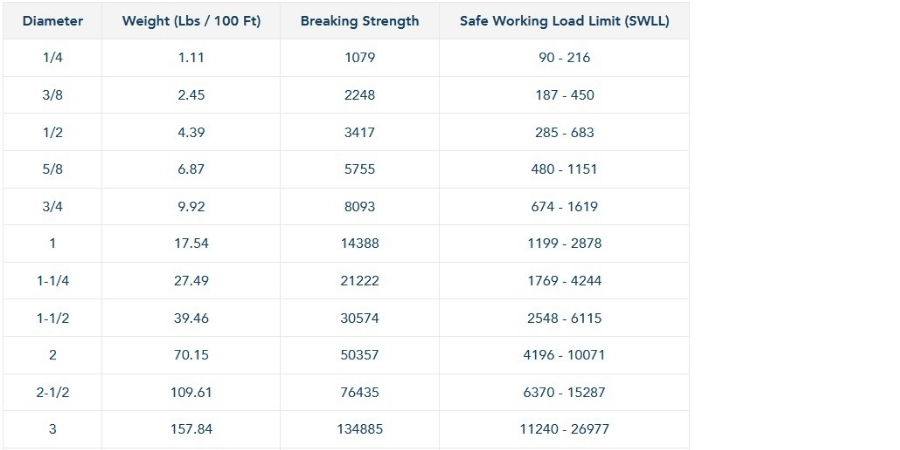
| Diameter | Weight (Lbs / 100 Ft) | Breaking Strength | Safe Working Load Limit (SWLL) |
|---|---|---|---|
| 1/4 | 1.11 | 1079 | 90 - 216 |
| 3/8 | 2.45 | 2248 | 187 - 450 |
| 1/2 | 4.39 | 3417 | 285 - 683 |
| 5/8 | 6.87 | 5755 | 480 - 1151 |
| 3/4 | 9.92 | 8093 | 674 - 1619 |
| 1 | 17.54 | 14388 | 1199 - 2878 |
| 1-1/4 | 27.49 | 21222 | 1769 - 4244 |
| 1-1/2 | 39.46 | 30574 | 2548 - 6115 |
| 2 | 70.15 | 50357 | 4196 - 10071 |
| 2-1/2 | 109.61 | 76435 | 6370 - 15287 |
| 3 | 157.84 | 134885 | 11240 - 26977 |
| 4 | 280.6 | 190637 | 15886 - 38127 |
Strength
Stretch
Durability
Abrasion Resistance
Rot Resistance
Sunlight / UV Resistance
Petroleum Resistance
Mold / Mildew Resistance
Loading results...