What's the best rope material for a deck railing: Promanila, Manila, or Polyester?
Rope Choice Matters for Deck Railings
When choosing rope for a deck railing, appearance matters—but so does performance. Your rope will face sun, rain, humidity, temperature swings, and potentially snow. The wrong material doesn't just fade; it can weaken, fray, grow mold, or become unsafe.
The best rope for outdoor railing balances three essentials:
- Aesthetics: Delivers the look you want
- Strength: Maintains structural integrity
- Weather resistance: Handles the elements without degrading
Three materials dominate deck railing applications: Manila, Promanila, and Polyester. Here's how they compare.
Manila Rope: The Classic Look (With Drawbacks)
Manila rope is what most people picture first. Made from natural abaca plant fibers, it has that iconic brown, slightly rough texture that screams nautical and works beautifully for traditional or beach-style decks.
The problem: Manila does not perform well outdoors long-term. It absorbs water, which causes swelling and shrinking. Over time it can rot. It's also prone to mold and mildew, especially in humid climates or shaded decks that don't dry quickly.
Lifespan: In mild conditions, a season or two. In wet environments, much faster.
Maintenance: High. Natural manila should be kept as dry as possible and may need replacement as it breaks down. Some people extend lifespan by treating it with oils or chemicals, but results are inconsistent.
Best for: If you demand the most authentic natural fiber look and are willing to replace it regularly—usually once per year—manila can work. Just understand the trade-off: authentic appearance for durability.
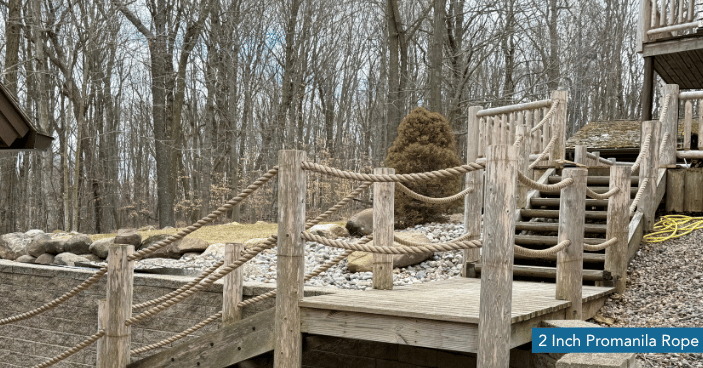
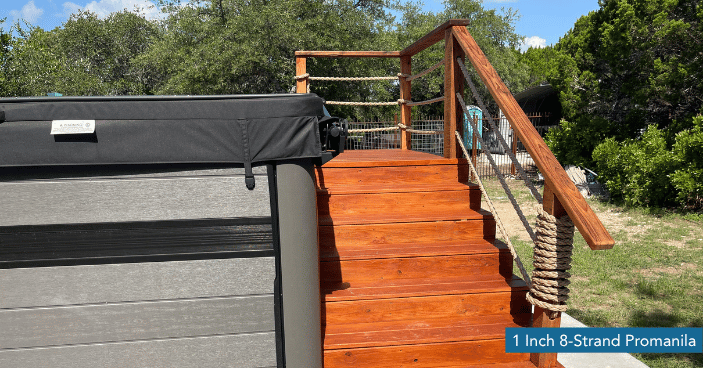
Promanila Rope: The Look of Manila Without the Headaches
Promanila exists to solve manila's durability problem. It's typically a polypropylene-based rope designed to mimic the color and texture of natural manila. At a glance, most people cannot tell the difference—but the performance is entirely different.
Key advantages:
- Does not absorb water, so no rot or water-related swelling
- Far less mold and mildew risk
- Consistent performance in wet conditions
- Superior UV resistance (especially premium danline construction)
- Lasts several years outdoors with proper installation
Quality matters: Not all promanila is created equal. Lower-quality versions do degrade faster in sun. RightRope's promanila uses danline construction, which has much higher UV and chemical resistance than standard polypropylene alternatives.
Available styles: Twisted or 8-strand braid for a more upscale appearance.
Maintenance: Low. Occasional cleaning is usually all that's needed.
Best for: Homeowners who want the traditional rope railing look with practical, long-term outdoor performance. This is why promanila consistently ranks highest in searches for "best rope for outdoor railing that looks natural" or "manila rope alternative for deck." It's the sweet spot for most projects.
Caveat: If your rope will be in full sun most of the time, polyester is the more UV-resistant choice.
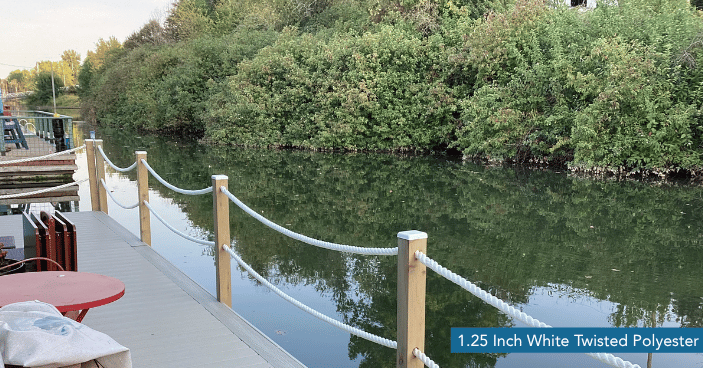
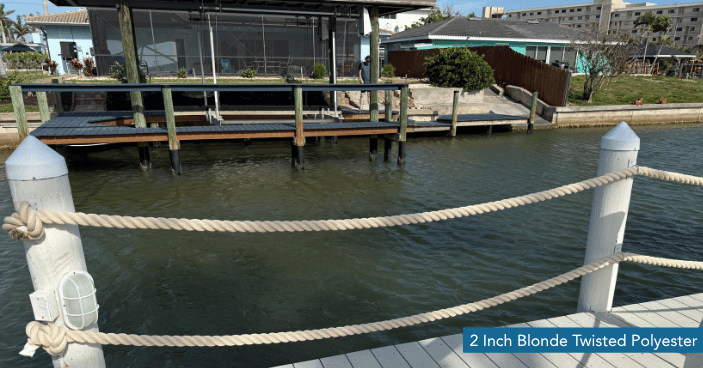
Polyester Rope: Maximum Durability and UV Resistance
Polyester is the ultimate choice for durability, but you trade some of that "natural rope look" for longevity.
Key advantages:
- Excellent UV resistance—ideal for full sun exposure
- Does not absorb much water, so it resists rot and mildew
- Maintains strength over time even in harsh outdoor conditions
- Commonly used in marine environments, which speaks to its durability
- Can last many years with minimal degradation
- Lowest maintenance option
Appearance: Polyester has a smoother, more modern look compared to the natural texture of manila or promanila. Available in black, white, and tan.
Available styles: Twisted or 8-strand braid.
Best for: If strength, longevity, and minimal maintenance are your priorities, polyester is the clear winner. It works equally well for clean, modern, and high-end deck designs. However, for rustic or coastal styles, it may not fit the aesthetic as well.
Promanila vs Manila vs Polyester: The Decision Framework
Choose Manila if: You want the most authentic natural fiber look and understand you'll replace it regularly (about once per year). Not recommended for outdoor use long-term.
Choose Promanila if: You want the traditional rope railing aesthetic with practical outdoor durability. This is the most popular choice for deck railing projects because it balances both priorities.
Choose Polyester if: Your main concern is longevity, strength, and minimal maintenance. It will outperform both manila and promanila in harsh and full-sun conditions.
Rope Size for Deck Railing
Rope diameter affects both safety and appearance. General recommendations:
- 4×4 posts: 1.25" or 1.5" diameter
- 6×6 posts: 1.5" to 2.5" diameter
Thicker rope tends to look more premium and feels more solid when used as a railing barrier.
Lifespan by Material
| Material | Outdoor Lifespan | Conditions That Matter |
|---|---|---|
| Manila | 1-2 seasons | Poor in wet/humid climates; faster degradation in shade |
| Promanila | Several years | UV exposure eventually takes a toll; holds up well in most conditions |
| Polyester | Many years | Minimal degradation; best in full-sun and harsh conditions |
Maintenance Requirements
| Material | Maintenance Level | What's Required |
|---|---|---|
| Manila | High | Keep dry; may need replacement; occasional oil/chemical treatment |
| Promanila | Low | Occasional cleaning |
| Polyester | Minimal | Easy cleaning when needed; set-it-and-forget-it option |
Installation Tips That Make a Difference
No matter which rope you choose, proper installation extends its life:
- Use solid brass brackets: Prevent corrosion and keep your railing system secure over time
- Finish rope ends properly: Synthetic ropes should have ends melted or secured to prevent fraying; natural ropes may need whipping
- Order finished rope: RightRope ropes come ready to install with proper end finishing
The Bottom Line
You're balancing style and performance whether you realize it or not. Manila gives you the classic look but comes with real durability limitations. Promanila delivers that same authentic appearance with far better weather resistance—why it's the most popular choice for deck railing. Polyester steps in when durability and longevity matter most, offering a clean, strong solution for harsh conditions.
For most homeowners: Promanila is the answer. It gives you the traditional look without the maintenance headache.
For maximum durability: Polyester wins, especially in full-sun exposure.
For authentic natural fiber: Manila works only if you accept annual replacement.
Pick the right rope from the start, and your deck railing won't just look good—it will stay that way.
Sources
- Promanila vs. Manila vs. Polyester: The Ultimate Deck Railing Showdown