Why Cheap Rope Fails (And Costs You More)
Estimated 0 min read
There’s a moment a lot of people run into sooner or later. You grab a rope because it looks fine, the price is right, and it says it can handle the job. Then a few weeks or months later, it starts to fuzz up, fade out, stretch too much, or worse, it snaps when you actually need it. Now you’re replacing it, fixing whatever it failed on, and wondering what went wrong.
If you’ve ever searched “why does rope break so easily” or “how long should rope last,” you’re already asking the right questions. The truth is simple. Cheap rope doesn’t just fail faster. It fails in predictable ways, and those failures cost more than just the price of the rope.
Let’s break down exactly how cheap rope fails, why it happens, and how choosing the right rope from the start saves you time, money, and headaches.
The First Failure: Weak Fibers and Inflated Strength Claims
One of the most common problems with cheap rope is that the strength numbers don’t tell the whole story. You might see a breaking strength listed, but what you’re not seeing is consistency. Lower quality rope is often made with mixed or recycled fibers, and that leads to weak spots throughout the line.
When people search “rope breaking strength vs working load,” what they are really trying to understand is why a rope rated for thousands of pounds can still fail under normal use. The answer is that cheap rope often lacks uniformity. One section might be strong, another might be significantly weaker, and you won’t know where that weak point is until it gives out.
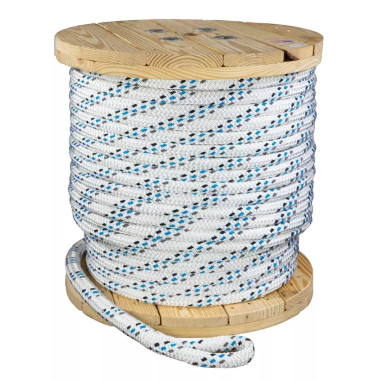
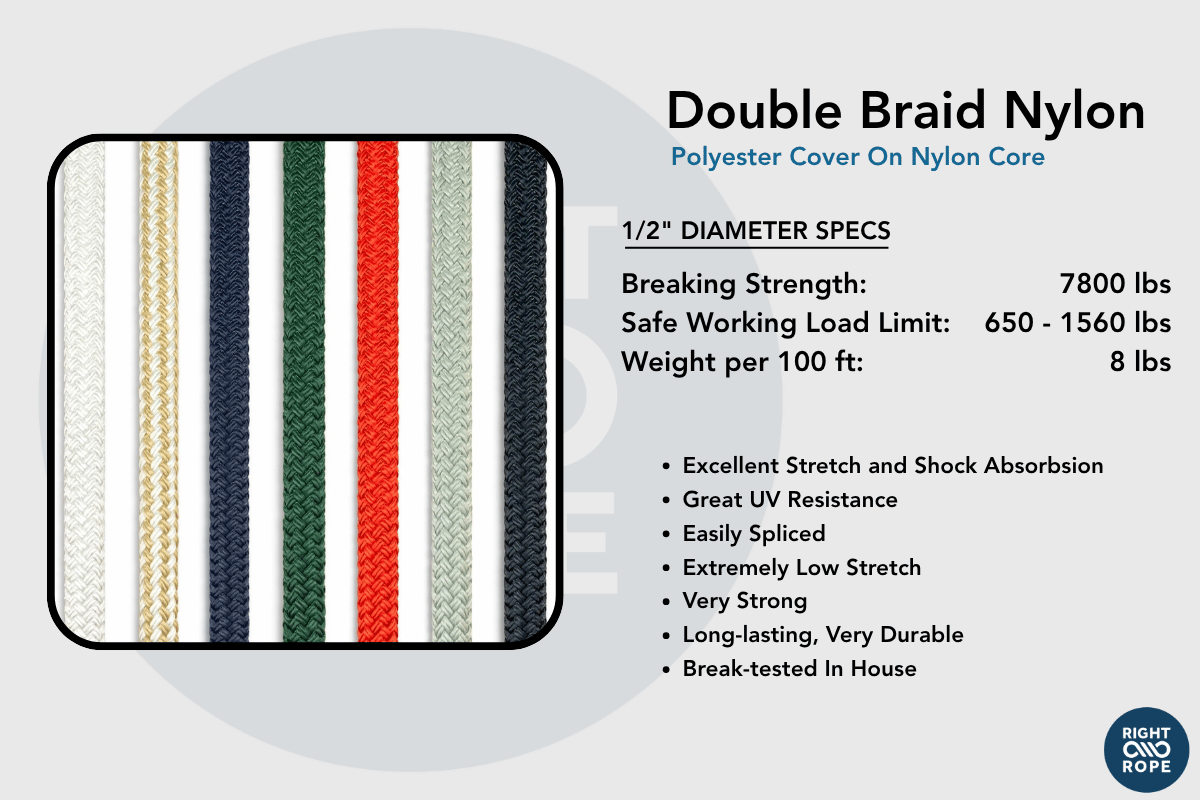
With a properly made rope, (like the double braid nylon and double braid polyester ropes available on RightRope) the fibers are consistent, the construction is controlled, and the strength is reliable across the entire length. That consistency is what keeps a rope from failing when it matters.
UV Damage: Outdoor Rope’s Greatest Enemy
If your rope is used outdoors at all, sunlight becomes a major factor. UV rays break down fibers over time, and cheap rope is especially vulnerable because it often lacks proper UV inhibitors.
This is why people search things like “does rope degrade in the sun” or “best UV resistant rope.” They’ve seen it happen. Rope that starts out smooth and strong turns brittle, faded, and weak. You’ll notice it first as discoloration, then stiffness, then fibers starting to crack and split.
Polyester rope like our Sail-Right Double Braid Polyester is naturally more UV resistant, which is why it’s often used in marine and outdoor applications. Nylon can also perform very well, especially when it’s made with quality materials and proper construction - though we often use a poly cover on a nylon core when the use case involves lots of sun.
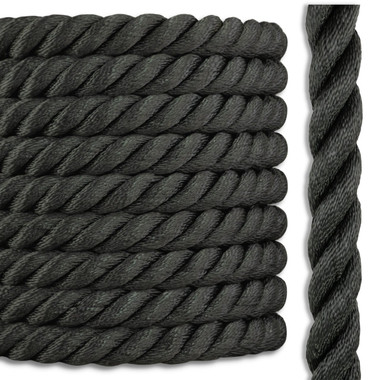
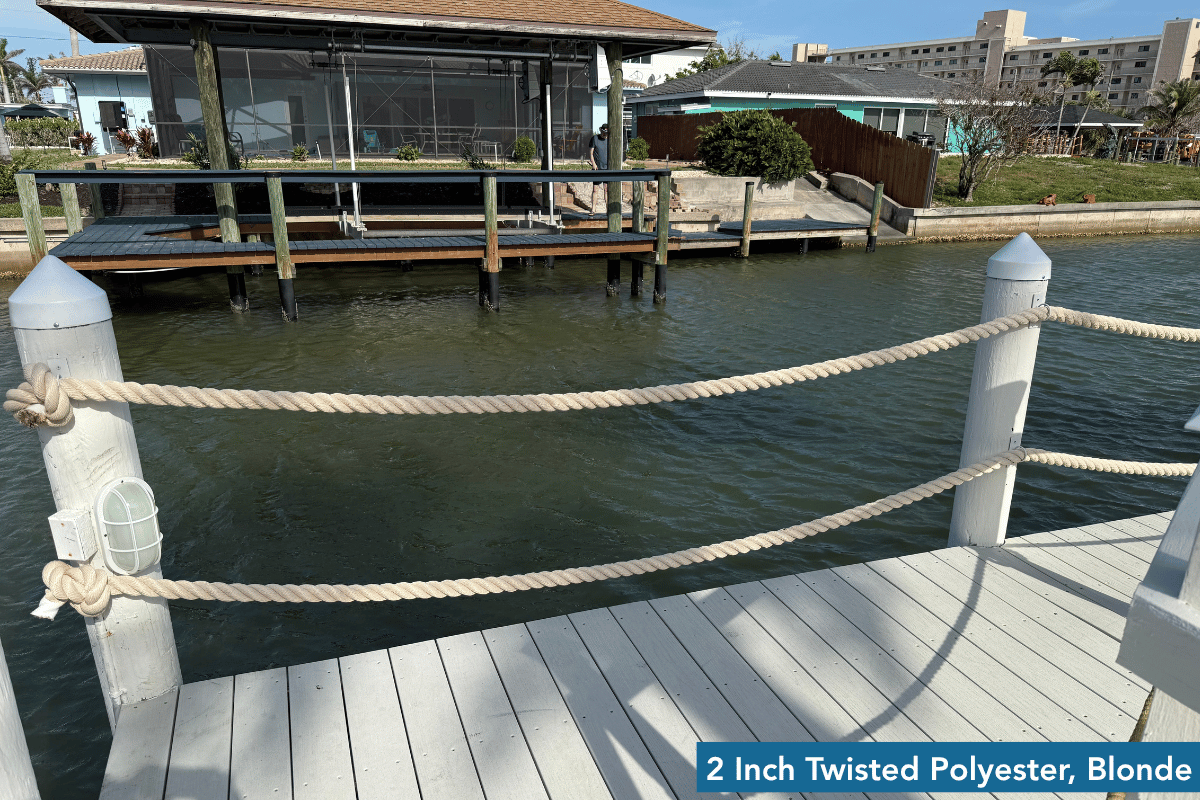
Our Promanila is a level above most promanila on the market on this point too. We use a special danline construction to improve UV resistance. Still, if a rope is going to be full sun year-round we would recommend an upgrade to Twisted Polyester Rope, which can still look pretty natural/nautical in blonde.
Where cheap rope fails is in the shortcuts. Less UV protection, lower quality polymers, and inconsistent manufacturing all lead to faster degradation. A rope that should last years ends up lasting a season.
Abrasion: Where Cheap Rope Really Shows Its Weakness
Rope rarely fails in the middle of a clean, untouched section. It fails where it rubs. Against a dock, a tree, a pulley, or a rough edge. That’s where abrasion comes into play.
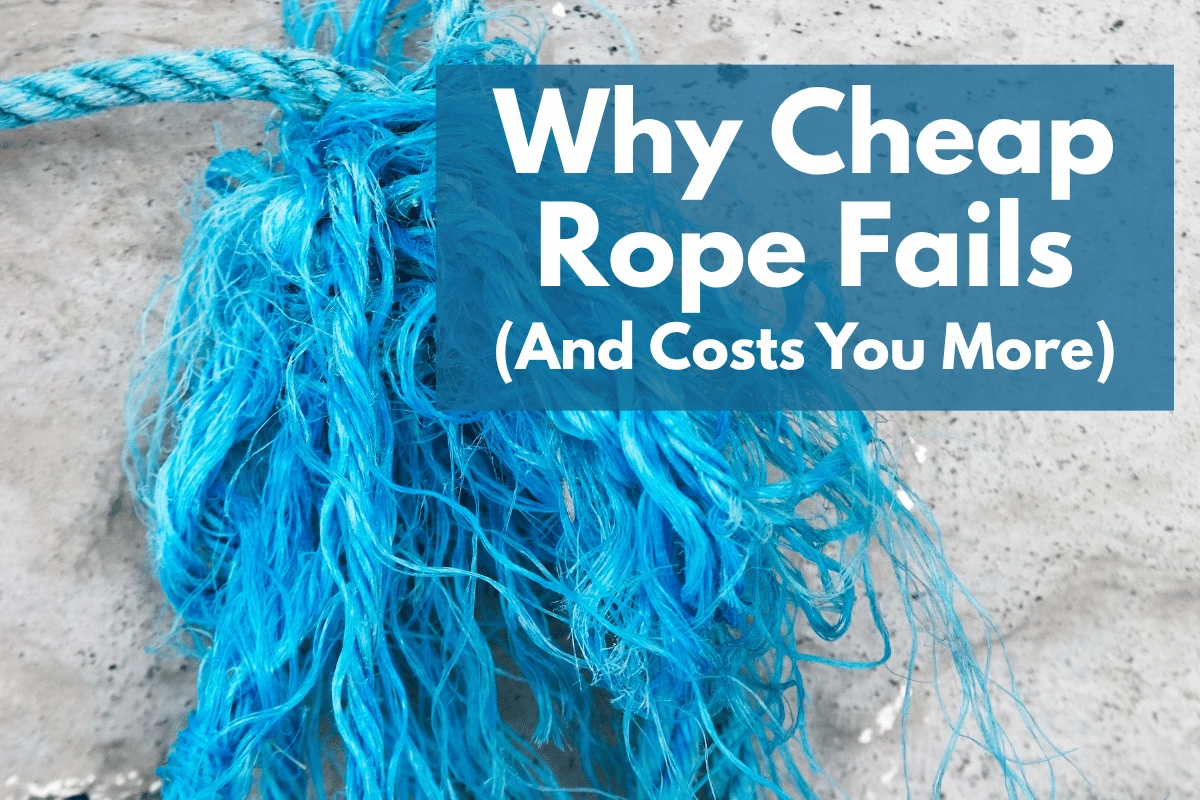
When people search “why does rope fray” or “how to prevent rope wear,” they’re dealing with abrasion damage. Cheap rope tends to have a loose or poorly constructed outer layer, which means it starts to fuzz and break down quickly when it comes into contact with anything rough.
Once that outer layer is compromised, the inner fibers are exposed. From there, failure accelerates fast.
A well made double braid rope has a tight, durable outer jacket designed to take that wear. It protects the core and extends the life of the rope significantly. That’s a big reason why higher quality ropes from RightRope hold up better in real world conditions.
Stretch Problems: Too Much or Not Enough
Stretch is one of those things that can either help you or hurt you, depending on the application. Cheap rope tends to get this wrong in both directions.
Some ropes stretch way too much. This is common with lower quality polypropylene or poorly made nylon. Under load, the rope elongates excessively, which can make it feel weak and unpredictable. In towing situations, that extra stretch can create dangerous snap-back if the rope suddenly recoils.
On the other end, some cheap ropes don’t stretch enough at all. That means they transfer shock directly to whatever they’re attached to. Cleats, anchor points, or hardware take the full force, which can lead to failure even if the rope itself doesn’t break immediately.
This is why people search “nylon vs polyester rope stretch” or “best rope for shock absorption.” Nylon, especially in a double braid construction, hits the balance most people need. It stretches under load to absorb shock but maintains its integrity.
Cheap rope doesn’t control stretch well, and that lack of control leads to failure either in the rope or in the system it’s part of. For a better understanding of shock loading and how to plan for it, read our Physics of The Fall blog.
Water Damage and Rot
Natural fiber rope has its place, but cheap versions of it tend to break down quickly when exposed to moisture. Even synthetic rope can run into problems if it’s poorly made.
When people look up “does rope rot” or “best rope for wet conditions,” they are usually dealing with mold, mildew, or internal fiber breakdown.
High quality synthetic ropes like nylon and polyester resist water absorption and don’t rot. They are built for marine and outdoor use. Promanila is another great natural looking option for outdoor decorative uses like rope railings or dock ropes, where moisture may occur. Cheap rope, especially low grade polypropylene or untreated natural fiber, can absorb water, weaken internally, and develop mold or mildew over time.
This kind of failure is tricky because it’s not always visible right away. The rope can look fine on the outside while losing strength on the inside.
Knot Slippage and Poor Handling
Another way cheap rope fails is in how it handles knots. If you’ve ever tied a knot and watched it slip or come loose under tension, you’ve seen this firsthand.
People often search “why won’t my rope hold a knot” or “best rope for knots,” and the answer comes down to construction and material.
Cheap rope tends to be overly slick or inconsistently braided, which makes it harder to tie secure knots. It can also flatten under load, which changes how the knot behaves and reduces holding power.
A well constructed rope maintains its shape, grips properly, and holds knots or splices as expected. That predictability is critical, especially in applications like docking, towing, or rigging.
Chemical Exposure and Environmental Breakdown
In many real world environments, rope is exposed to more than just sun and water. Fuel, oil, salt, and chemicals all play a role.
Cheap rope often uses lower grade polymers that are more susceptible to chemical breakdown. Over time, exposure can weaken the fibers, making the rope brittle or causing it to lose strength.
Polyester and nylon ropes, especially higher quality versions, are much more resistant to these environmental factors. That’s one of the reasons they are widely used in marine, industrial, and construction settings.
Why Cheap Rope Ends Up Costing More
At first glance, cheap rope looks like a good deal. You save money upfront, and for light use, it might seem fine.
But when you factor in how quickly it wears out, how often it needs to be replaced, and the potential damage it can cause when it fails, the cost adds up fast.
If a dock line fails and your boat collides with something, that repair is going to cost a lot more than the difference between a cheap rope and a quality one. If a towing rope snaps under load, you’re dealing with both safety risks and potential equipment damage.
People search “is expensive rope worth it” because they’ve already experienced this. The answer is yes, not because it’s expensive, but because it’s built to do the job correctly and last longer.
Choosing Rope That Actually Holds Up
The key to avoiding all of these problems is choosing the right rope for the job from the start. That means matching the material, construction, and strength to the application.
For marine use, double braid nylon and polyester ropes are reliable choices because they balance strength, durability, and resistance to the elements (for help deciding on dock lines, mooring lines, and anchor lines, read this). For general utility, solid braid and twisted ropes can work well when they are made with quality materials.
The ropes available on RightRope are built with real use in mind. That means consistent fibers, proper construction, and performance you can count on. Whether you’re tying off a boat, pulling wire, or handling a general purpose job, you’re getting a rope that won’t let you down when it matters.
The Bottom Line
Cheap rope doesn’t fail randomly. It fails because of weak materials, poor construction, and shortcuts in manufacturing. It breaks down faster in the sun, wears out quicker under friction, handles poorly, and loses strength in conditions where a good rope keeps working.
If you rely on rope for anything important, it’s worth getting one that’s built to last. Not because it looks better or feels nicer, but because it performs when you need it to.
That’s the difference between replacing rope every few months and using the same line season after season. It’s the difference between hoping it holds and knowing it will.